




IgA nephropathy progresses to end-stage renal disease in 20–40% of patients within two decades. Telitacicept, a recombinant TACI-Fc fusion protein blocking B-cell activating factor and a proliferation-inducing ligand, has conditional regulatory approval in China. This is, to our knowledge, the first systematic review and meta-analysis to combine randomised and real-world comparator-controlled evidence for telitacicept in IgA nephropathy.
MethodsFollowing PRISMA 2020 guidance (PROSPERO: CRD420261425669), PubMed, Cochrane, Google Scholar, DOAJ, and ClinicalTrials.gov were searched to June 2026. Eligible studies enrolled adults with biopsy-confirmed IgA nephropathy treated with telitacicept versus supportive care. The primary outcome was percentage change in proteinuria and secondary outcomes included percentage change in eGFR and adverse events. Pooling used a random-effects model in RevMan 5.4.1, and certainty of evidence was assessed using GRADE.
ResultsSix studies met the inclusion criteria, two randomised trials and four observational studies, enrolling 561 patients in total. Telitacicept was associated with a significantly greater reduction in proteinuria than supportive care (mean difference −45.48 percentage points, 95% CI −56.98 to −33.99). In the two randomised trials alone the difference was −54.93 percentage points (−61.70 to −48.16). A post hoc analysis excluding Li et al. gave −53.31 percentage points (−59.30 to −47.31). For eGFR, the between-group difference in percentage change from baseline was +7.27 percentage points (5.01–9.53) across all six studies and +6.76 percentage points (3.63–9.88) in the randomised trials alone. Adverse events were more common with telitacicept (OR 1.63, 95% CI 1.08–2.46), about 10 more per 100 patients treated, and were mainly injection-site reactions. There was no significant excess of serious adverse events. Certainty of evidence was moderate for eGFR and low or very low for proteinuria, adverse events and infections.
ConclusionsTelitacicept appears to lower proteinuria and was associated with a short-term between-group difference in percentage eGFR change versus supportive care in IgAN, without a significant excess of serious adverse events; the clinical importance and durability of the eGFR finding remain uncertain. These findings should be read as preliminary given the modest sample size and short follow-up, and none of the included studies assessed hard kidney outcomes; the available studies are insufficient to establish comparative safety. These results suggest telitacicept may be a promising immunological option for high-risk IgAN patients whose proteinuria persists despite optimised supportive care. Randomised trials in diverse populations with hard kidney endpoints are needed to establish whether long-term benefit exists.
La nefropatía por IgA progresa a enfermedad renal terminal entre el 20-40% de los pacientes en 2 décadas. El telitacicept, una proteína de fusión recombinante TACI-Fc, que bloquea el factor activador de células B y el ligando inductor de proliferación, tiene aprobación regulatoria condicional en China. Esta es, hasta donde sabemos, la primera revisión sistemática y metaanálisis que combina evidencia aleatorizada y de práctica clínica real, controlada con comparador, sobre el telitacicept en la nefropatía por IgA.
MétodosSiguiendo las directrices PRISMA 2020 (PROSPERO: CRD420261425669), se buscó en PubMed, Cochrane, Google Scholar, DOAJ y ClinicalTrials.gov hasta junio de 2026. Los estudios elegibles incluyeron adultos con nefropatía por IgA confirmada por biopsia tratados con telitacicept frente a tratamiento de soporte. El desenlace primario fue el cambio porcentual en la proteinuria; los secundarios, el cambio porcentual en la TFGe y los eventos adversos. Los datos se combinaron con un modelo de efectos aleatorios en RevMan 5.4.1 y la certeza de la evidencia se evaluó con GRADE.
ResultadosSeis estudios cumplieron los criterios de inclusión, 2 ensayos aleatorizados y 4 observacionales, con 561 pacientes. El telitacicept se asoció con una reducción de la proteinuria significativamente mayor que el tratamiento de soporte (diferencia de medias −45,48 puntos porcentuales; IC del 95%: −56,98 a −33,99). En los 2 ensayos aleatorizados, la diferencia fue de −54,93 puntos porcentuales (−61,70 a −48,16). Un análisis post hoc excluyendo a Li et al. dio −53,31 puntos porcentuales (−59,30 a −47,31). La diferencia entre grupos en el cambio porcentual de la TFGe respecto al valor basal fue de +7,27 puntos porcentuales (5,01–9,53) en los 6 estudios y de +6,76 (3,63-9,88) en los ensayos aleatorizados. Los eventos adversos fueron más frecuentes con telitacicept (OR: 1,63; IC del 95%: 1,08-2,46), aproximadamente 10 más por cada 100 pacientes tratados, y consistieron principalmente en reacciones en el sitio de inyección. No se observó un exceso significativo de eventos adversos graves. La certeza de la evidencia fue moderada para la TFGe y baja o muy baja para la proteinuria, los eventos adversos y las infecciones.
ConclusionesEl telitacicept parece reducir la proteinuria y se asoció con una diferencia entre grupos a corto plazo en el cambio porcentual de la TFGe frente al tratamiento de soporte en la nefropatía por IgA, sin un exceso significativo de eventos adversos graves; la importancia clínica y la durabilidad de este hallazgo siguen siendo inciertas. Estos hallazgos deben interpretarse como preliminares dado el modesto tamaño muestral y el corto seguimiento, y ninguno de los estudios incluidos evaluó desenlaces renales duros; los estudios disponibles son insuficientes para establecer la seguridad comparativa. Estos resultados sugieren que el telitacicept podría ser una opción inmunológica prometedora para los pacientes con nefropatía por IgA de alto riesgo cuya proteinuria persiste pese a un tratamiento de soporte optimizado. Se requieren ensayos aleatorizados en poblaciones diversas con desenlaces renales duros para establecer si existe un beneficio a largo plazo.
IgA nephropathy (IgAN) is the commonest primary glomerulonephritis globally, with an annual incidence of 2–5 per 100,000 that rises sharply in Asian populations, among whom it represents 40–50% of biopsy-confirmed cases.1,2 Twenty to forty percent of patients develop end-stage renal disease (ESRD) within two decades of diagnosis, imposing a substantial burden on renal replacement therapy programmes worldwide.1,3
IgAN pathogenesis follows the four-hit model in which mucosal B cells overproduce galactose-deficient IgA1 (Gd-IgA1), autoantibodies recognise it, immune complexes form, and these deposit in the glomerular mesangium where complement-mediated injury ensues.4 B-cell activating factor (BAFF) and a proliferation-inducing ligand (APRIL) sustain Gd-IgA1-producing plasma cells and are elevated in IgAN in proportion to proteinuria severity and eGFR loss, marking them as therapeutic targets.5,6
The current standard of care comprises maximal renin–angiotensin system (RAS) blockade, sodium–glucose co-transporter-2 (SGLT2) inhibitors, and blood pressure control, supplemented in high-risk patients by targeted-release budesonide and sparsentan, each approved on proteinuria as a surrogate endpoint.7 Nevertheless, many patients remain above proteinuria targets despite these measures, underscoring the need for novel immunologically targeted therapies.7,8
Telitacicept is a recombinant TACI-Fc fusion protein that concurrently blocks BAFF and APRIL, suppressing Gd-IgA1-producing plasma cells more completely than single-ligand blockade and producing sustained reductions in circulating B cells and serum immunoglobulins.9,10 The phase 3 ORIGIN 3 trial of atacicept, which shares this dual-inhibitory mechanism, recently demonstrated significant proteinuria reduction in IgAN,11 further validating the therapeutic importance of this pathway.
The phase 2 randomised controlled trial (RCT) showed that telitacicept reduced proteinuria by approximately 49% from baseline while stabilising eGFR and producing sustained falls in serum IgA.12 The landmark phase 3 TELIGAN trial (May 2026) demonstrated a 55.0% relative reduction in 24-h urinary protein-to-creatinine ratio (UPCR) versus placebo at a pre-specified 39-week interim analysis, with stable eGFR, prompting conditional regulatory approval in China.13 A network meta-analysis of 57 RCTs and 19 interventions subsequently placed telitacicept among the most effective agents for lowering proteinuria in IgAN.14
Despite this evidence base and one prior scoping review on telitacicept,15 no systematic review and meta-analysis (SRMA) has yet integrated real-world observational evidence alongside randomised trials specifically for telitacicept versus supportive care. The objective of this study is to present what we believe is the first SRMA to combine RCT and real-world evidence for telitacicept specifically, with a search extending to June 2026 that captures the phase 3 TELIGAN interim analysis, synthesising data on proteinuria reduction, eGFR change, and adverse events to deliver a comprehensive evidence base for clinical practice and guideline development.
Material and methodsProtocol and registrationThe Preferred Reporting Items for Systematic Reviews and Meta-Analyses (PRISMA) 2020 guidelines were followed to conduct this meta-analysis and it was registered in PROSPERO (registration number: CRD420261425669).16
Search strategy and information sourcesPubMed, Cochrane, Google Scholar, DOAJ, and ClinicalTrials.gov were each searched systematically till June 2026 by two independent reviewers. Search terms covering telitacicept, IgA nephropathy, and their synonyms were combined using Boolean operators, with Medical Subject Headings (MeSH) applied in the Cochrane Library search. To capture further eligible work, the reference lists of every retrieved article were searched (Supplementary Appendix 1).
Eligibility criteriaStudy selection applied a pre-specified PICOS framework. To qualify, studies had to enrol adults (≥18 years) with biopsy-confirmed primary IgAN and persistent proteinuria (≥0.5g/day or UPCR ≥0.5g/g) that continued despite optimised RAS blockade. The intervention of interest was telitacicept given by weekly subcutaneous injection at any dose, with or without concurrent RAS blockade. Comparator arms had to receive supportive care alone, which is defined as RAS inhibition, with or without non-immunosuppressive nephroprotective agents (e.g., SGLT2 inhibitors), or matching placebo. We excluded studies whose comparator arm received immunosuppressive therapy as primary treatment (corticosteroids ≥20mg/day prednisone-equivalent, calcineurin inhibitors, mycophenolate mofetil, cyclophosphamide, rituximab, or other B-cell-directed agents). Acceptable designs comprised RCTs together with prospective and retrospective cohort studies carrying a concurrent control arm. We excluded single-arm studies, case reports, letters, conference abstracts lacking sufficient data, unpublished articles and secondary analyses of overlapping patient populations. No language filter was applied to the searches, but eligibility was restricted to reports available in English.
Study process and data extractionDuplicates were removed and handled in rayyan.ai software. Titles and abstracts were screened separately by two reviewers, after which potentially eligible articles underwent a full text review against the pre-specified criteria. Once screening was complete, two reviewers extracted data independently and cross-checked one another's extractions for accuracy. Differences of opinion were resolved by reaching an agreement or having a third reviewer decide. (Supplementary Tables 1 and 2).
Risk of bias and GRADE assessmentFor RCTs, the Cochrane risk of bias (RoB2) tool17 was used across its five domains and for observational cohort studies, the ROBINS-I tool18 was used across its seven domains. Two reviewers independently made these decisions based on the standards for assessing the risk of bias. Any conflict was settled by a third reviewer. Risk-of-bias findings were displayed in a traffic light plot (Supplementary Fig. 1(a), (b)).
Certainty of evidence for the primary and key secondary outcomes (proteinuria, eGFR, any adverse event, serious adverse events, urinary tract infection, and upper respiratory tract infection) was assessed using the GRADE approach,19 considering risk of bias, inconsistency, indirectness, imprecision, and publication bias (Supplementary Table 3).
Statistical analysisEvery analysis was run in Review Manager (RevMan version 5.4.1). Percentage change in proteinuria from baseline was the primary outcome. Proteinuria was reported as 24-h urinary protein excretion in five studies and as the 24-h urinary protein-to-creatinine ratio in one.13 Because each study contributed a percentage change from its own baseline, the pooled estimate is dimensionless and unaffected by the differing units, assuming urinary creatinine excretion remained stable over follow-up. Percentage reduction is also the metric on which proteinuria was established as a reasonably likely surrogate endpoint for progression to kidney failure in IgAN.20 Secondary outcomes comprised percentage change in eGFR from baseline, any adverse event, urinary tract infection (UTI), upper respiratory tract infection (URTI), injection-site reactions (ISRs), serious adverse events (SAEs) and serum immunoglobulins. Where fewer than three studies reported an outcome, it was not pooled and is described narratively.
Continuous outcomes were summarised as the mean difference (MD) with 95% confidence interval (CI) via the generic inverse variance (GIV) method, while binary outcomes used the odds ratio (OR) with 95% CI computed by the Mantel–Haenszel method. Absolute risk differences per 100 patients were derived by applying the pooled odds ratio (and its 95% CI) to the pooled control-group event rate. When a study presented a continuous outcome as median and interquartile range (IQR), the sample mean and SD were derived from the reported median, IQR, and sample size using the method of Wan et al. (Scenario C2), which yields unbiased estimates for approximately normal or moderately skewed distributions.21 When a study reported a between-group treatment effect as a geometric mean ratio or least-squares mean difference with 95% CI, the standard error entered into the meta-analysis was obtained from the reported CI as SE=(upper limit−lower limit)/3.92.22 For Lv et al. (2023),12 percentage change in proteinuria was derived from arm-level baseline and week-24 mean±SE values using the delta method, as the original publication reported this outcome only as an ANCOVA-adjusted least-squares mean difference in g/day.23 This estimate is reconstructed from the trial's published summary statistics rather than taken from its own analysis, and the delta method is a first-order approximation. It is expressed as a percentage change and is unadjusted, whereas the trial reported an ANCOVA-adjusted least-squares mean difference in g/day, so the two are not directly comparable. Input values, formulae, variance calculation and assumptions are set out in Supplementary Table 4.
For all outcomes, a random-effects model was pre-specified as the primary pooling approach, in anticipation of the clinical and methodological heterogeneity expected from combining RCTs with observational cohort studies and from varying follow-up durations.22,24 The heterogeneity was calculated via the I2 statistic using a random-effects model (DerSimonian–Laird method), interpreted as follows: negligible (0–30%), moderate (30–60%), substantial (50–90%), or significant (75–100%).
Li et al. was removed in a post hoc sensitivity analysis because it was the sole study with severe between-arm imbalance in prior immunosuppressant (66.7% vs 0%) and glucocorticoid use (61.1% vs 0%) and no corrective measure applied. The remaining observational studies either excluded such patients25 or used propensity score matching.26,27 It was, moreover, the only 4-arm study reporting a significant between-group difference in Oxford T-score (p=0.049). Post hoc sensitivity analyses were performed to assess the influence of outcome-metric heterogeneity (24-h urinary protein excretion versus urine protein-to-creatinine ratio), follow-up duration, and exclusion of the reconstructed Lv et al. (2023) estimate on the pooled proteinuria estimate. Subgroup analyses were also performed based on study design.
Because the six included studies are too few to reliably detect small-study effects, assessment of publication bias by funnel plot asymmetry or Egger's test was not undertaken. Statistical significance was defined as p<0.05.
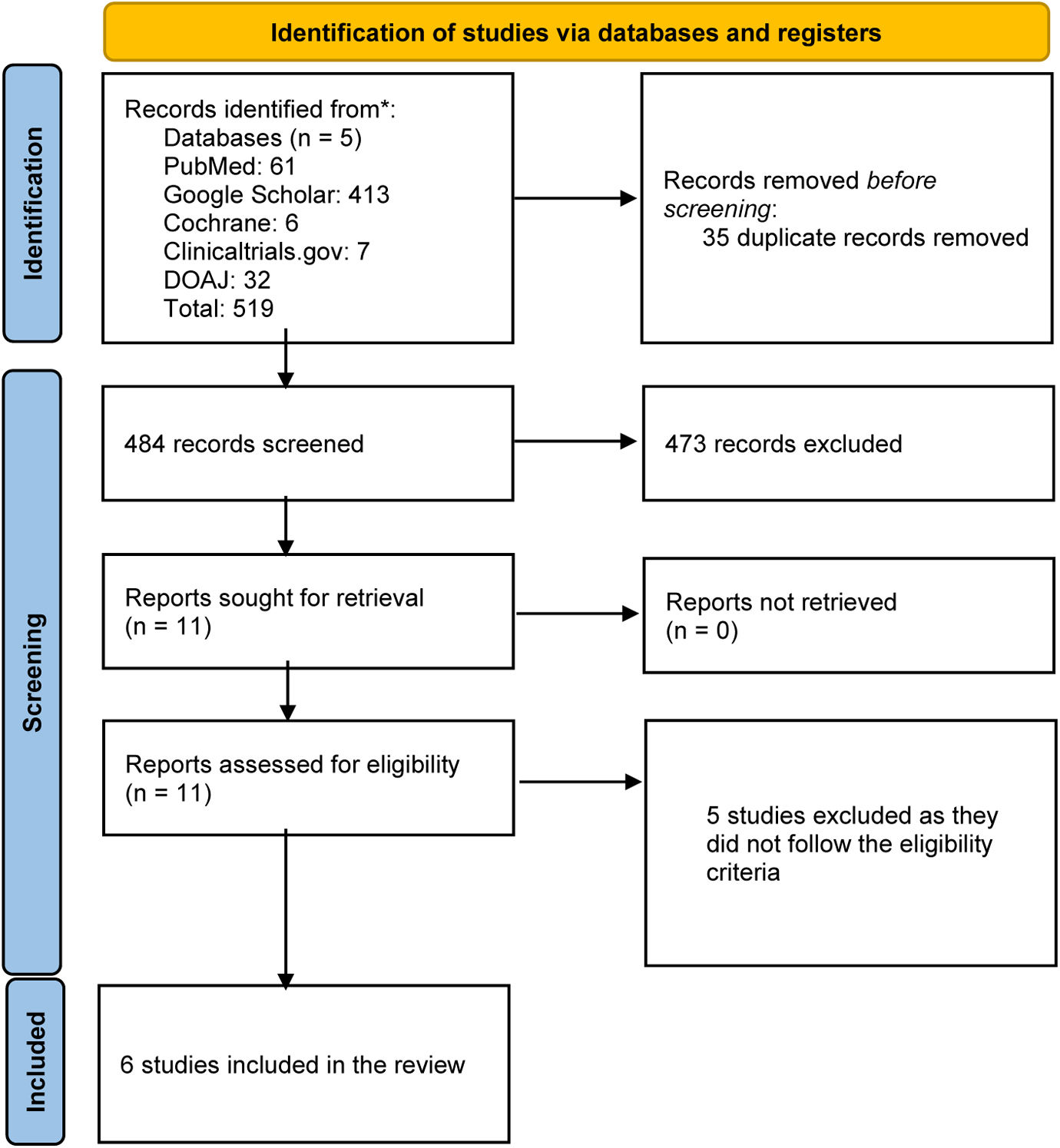
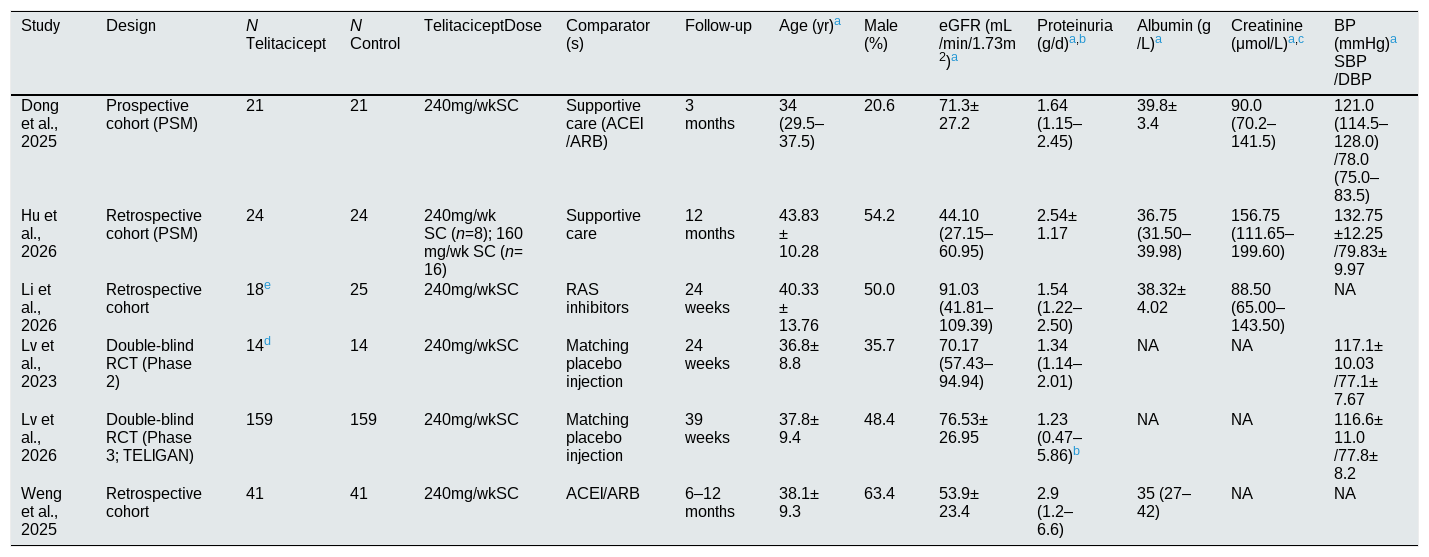
ResultsSearch results and study selectionThe initial search yielded 519 records. After 35 duplicates were discarded, titles and abstracts of the remaining 484 were screened. This step excluded 473 records, leaving 11 for in-depth full-text assessment, of which six met the final criteria. Among these six, two were RCTs12,13 and four of them were observational studies.25–28 The full selection pathway is shown in the PRISMA flow diagram (Fig. 1). In total, the meta-analysis pooled 561 participants with 277 starting on telitacicept and 284 receiving supportive care. Table 1 shows their baseline characteristics.
Baseline characteristics of the six included studies comparing telitacicept versus comparator therapy in patients with IgA nephropathy.
| Study | Design | NTelitacicept | NControl | TelitaciceptDose | Comparator(s) | Follow-up | Age (yr)a | Male (%) | eGFR (mL/min/1.73m2)a | Proteinuria (g/d)a,b | Albumin (g/L)a | Creatinine (μmol/L)a,c | BP (mmHg)aSBP/DBP |
|---|---|---|---|---|---|---|---|---|---|---|---|---|---|
| Dong et al., 2025 | Prospective cohort (PSM) | 21 | 21 | 240mg/wkSC | Supportive care (ACEI/ARB) | 3 months | 34 (29.5–37.5) | 20.6 | 71.3±27.2 | 1.64 (1.15–2.45) | 39.8±3.4 | 90.0 (70.2–141.5) | 121.0 (114.5–128.0)/78.0 (75.0–83.5) |
| Hu et al., 2026 | Retrospective cohort (PSM) | 24 | 24 | 240mg/wk SC (n=8); 160mg/wk SC (n=16) | Supportive care | 12 months | 43.83±10.28 | 54.2 | 44.10 (27.15–60.95) | 2.54±1.17 | 36.75 (31.50–39.98) | 156.75 (111.65–199.60) | 132.75±12.25/79.83±9.97 |
| Li et al., 2026 | Retrospective cohort | 18e | 25 | 240mg/wkSC | RAS inhibitors | 24 weeks | 40.33±13.76 | 50.0 | 91.03 (41.81–109.39) | 1.54 (1.22–2.50) | 38.32±4.02 | 88.50 (65.00–143.50) | NA |
| Lv et al., 2023 | Double-blind RCT (Phase 2) | 14d | 14 | 240mg/wkSC | Matching placebo injection | 24 weeks | 36.8±8.8 | 35.7 | 70.17 (57.43–94.94) | 1.34 (1.14–2.01) | NA | NA | 117.1±10.03/77.1±7.67 |
| Lv et al., 2026 | Double-blind RCT (Phase 3; TELIGAN) | 159 | 159 | 240mg/wkSC | Matching placebo injection | 39 weeks | 37.8±9.4 | 48.4 | 76.53±26.95 | 1.23 (0.47–5.86)b | NA | NA | 116.6±11.0/77.8±8.2 |
| Weng et al., 2025 | Retrospective cohort | 41 | 41 | 240mg/wkSC | ACEI/ARB | 6–12 months | 38.1±9.3 | 63.4 | 53.9±23.4 | 2.9 (1.2–6.6) | 35 (27–42) | NA | NA |
Abbreviations: ACEI, angiotensin-converting enzyme inhibitor; ARB, angiotensin receptor blocker; BP, blood pressure; DBP, diastolic blood pressure; eGFR, estimated glomerular filtration rate; IQR, interquartile range; NA, not reported; PSM, propensity score matching; RAS, renin–angiotensin system; RCT, randomised controlled trial; SC, subcutaneous; SD, standard deviation; SBP, systolic blood pressure.
Values are mean±SD or median (IQR or range) as reported in source studies. All baseline data reflect the telitacicept arm(s) at study entry.
Lv et al., 2026 reported proteinuria as the 24-h urinary protein-to-creatinine ratio (UPCR, g/g) rather than absolute 24-h urinary protein excretion; median UPCR (range) shown.
Hu et al. label creatinine as mmol/L in the source publication; values are clinically consistent with μmol/L and are presented as such.
For Lv et al., 2023, the N shown is the 240mg arm only; pooled analyses for this trial (proteinuria, eGFR, and any adverse event; Figs. 2, 4, and 5) draw on this arm alone. Serious adverse events and injection-site reactions (Results) are reported narratively rather than pooled and reflect the trial's full safety population across both active-dose arms (160mg and 240mg), as originally published; the shared placebo group is never split or reused, so no double counting occurs.
Li et al. is a four-arm study. The N shown reflects the telitacicept-monotherapy arm (n=18) and its paired RAS-inhibitor control (n=25). The telitacicept-plus-glucocorticoids arm (n=38) and its paired control were not pooled, as combining telitacicept with an additional immunosuppressive agent confounds the effect attributable to telitacicept alone.
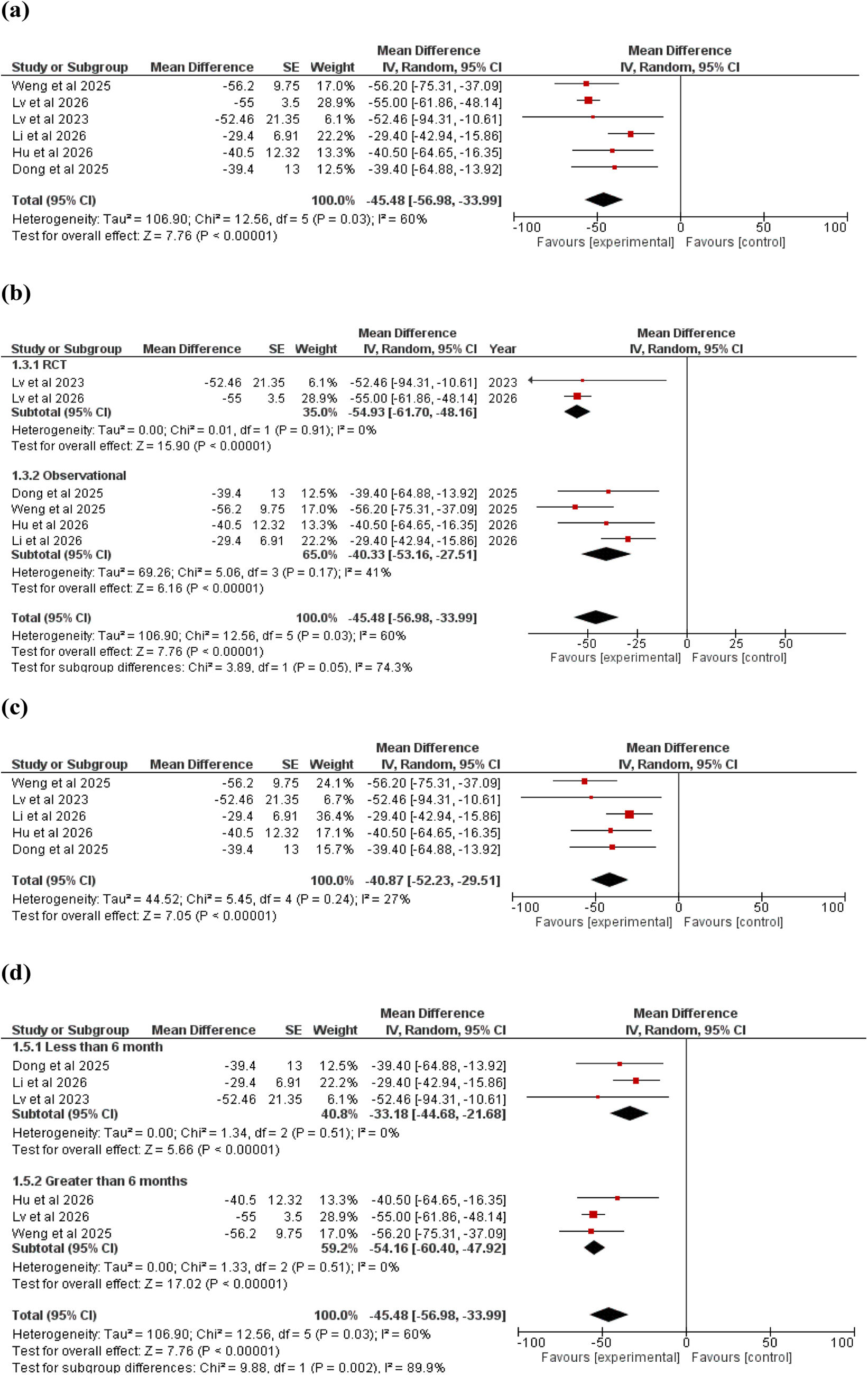
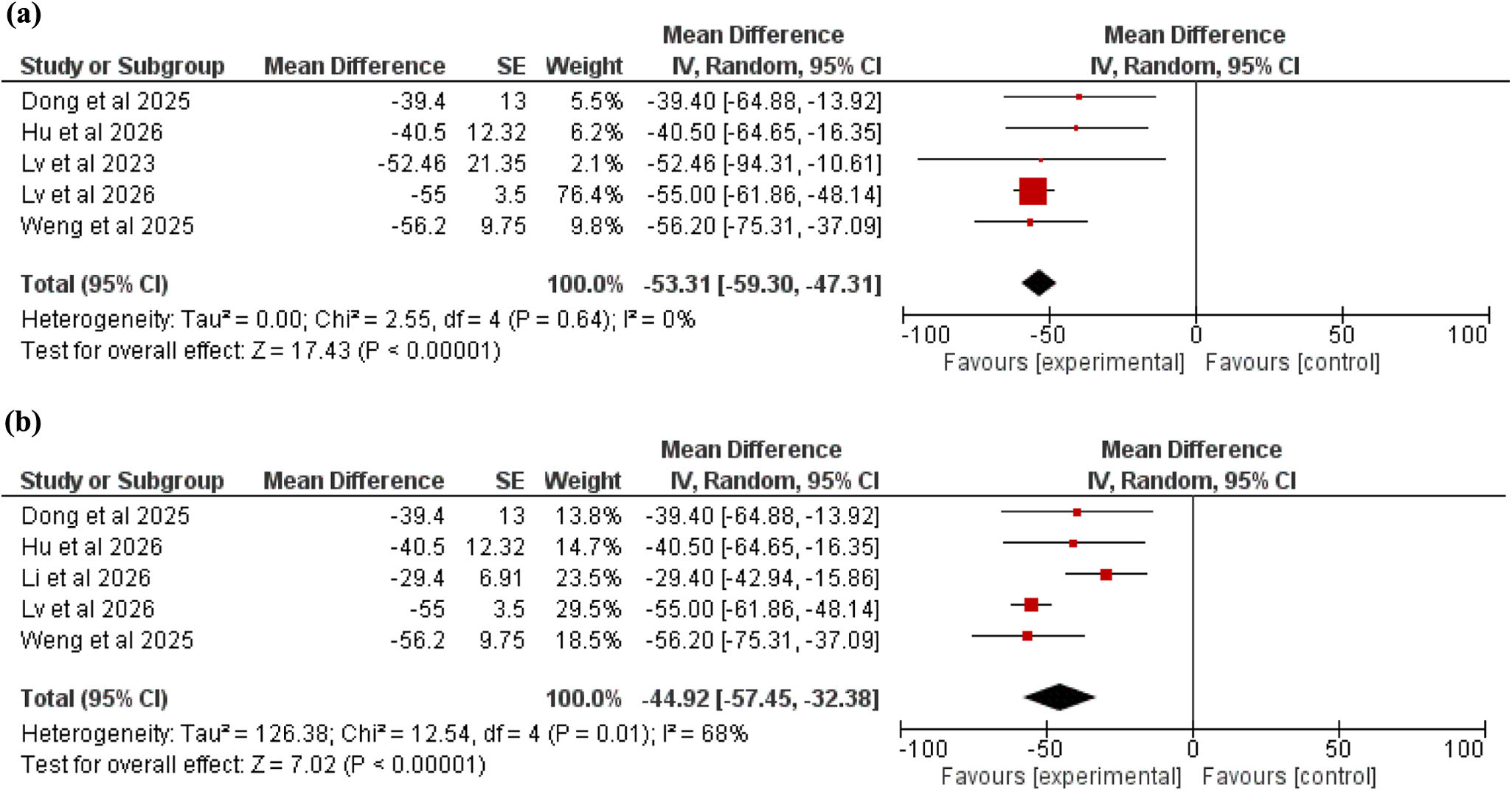
The primary analysis pooled all six studies (n=561), with a pooled between-group difference of −45.48 percentage points (95% CI −56.98 to −33.99; p<0.00001; Fig. 2(a)). Heterogeneity was substantial (I2=60%; Chi2=12.56, df=5, p=0.03). Subgroup analysis by study design showed a pooled estimate of −54.93 percentage points (95% CI −61.70 to −48.16; I2=0%) among randomised trials and −40.33 percentage points (95% CI −53.16 to −27.51; I2=41%) among observational studies (test for subgroup differences p=0.05; Fig. 2(b)). Restricting to the five studies reporting 24-h urinary protein excretion (n=243; excluding Lv et al., 2026, which reported UPCR) yielded a pooled estimate of −40.87 percentage points (95% CI −52.23 to −29.51; I2=27%; Fig. 2(c)), consistent in direction and magnitude with the primary estimate and with overlapping confidence intervals. Stratified by follow-up duration, the pooled estimate was −33.18 percentage points (95% CI −44.68 to −21.68; I2=0%) among studies with follow-up of less than 6 months and −54.16 percentage points (95% CI −60.40 to −47.92; I2=0%) among studies with follow-up beyond six months (test for subgroup differences p=0.002; Fig. 2(d)). A sensitivity analysis excluding Li et al. (28) yielded a pooled estimate of −53.31 percentage points (95% CI −59.30 to −47.31; I2=0%; Fig. 3(a)). Excluding the reconstructed Lv et al. (2023) estimate gave a pooled estimate of −44.92 percentage points (95% CI −57.45 to −32.38; I2=68%; five studies, n=533; Fig. 3(b)), close to the primary estimate.
(a) Forest plot of the percentage change in proteinuria from baseline (primary outcome). (b) Subgroup analysis of the percentage change in proteinuria from baseline, comparing randomised controlled trials versus observational studies. (c) Post hoc sensitivity analysis of the percentage change in proteinuria from baseline, restricted to the five studies reporting 24-h urinary protein excretion (excluding the study reporting urine protein-to-creatinine ratio). (d) Post hoc sensitivity analysis of the percentage change in proteinuria from baseline, stratified by follow-up duration (≤6 months versus >6 months). Data were pooled using a random-effects model (DerSimonian–Laird/inverse variance). MD, mean difference; CI, confidence interval; IV, inverse variance; RCT, randomised controlled trial.
Post hoc sensitivity analyses of the percentage change in proteinuria from baseline. (a) Excluding Li et al. (b) Excluding the reconstructed Lv et al. (2023) estimate. Data were pooled using a random-effects model (DerSimonian–Laird/inverse variance). MD, mean difference; CI, confidence interval; IV, inverse variance.
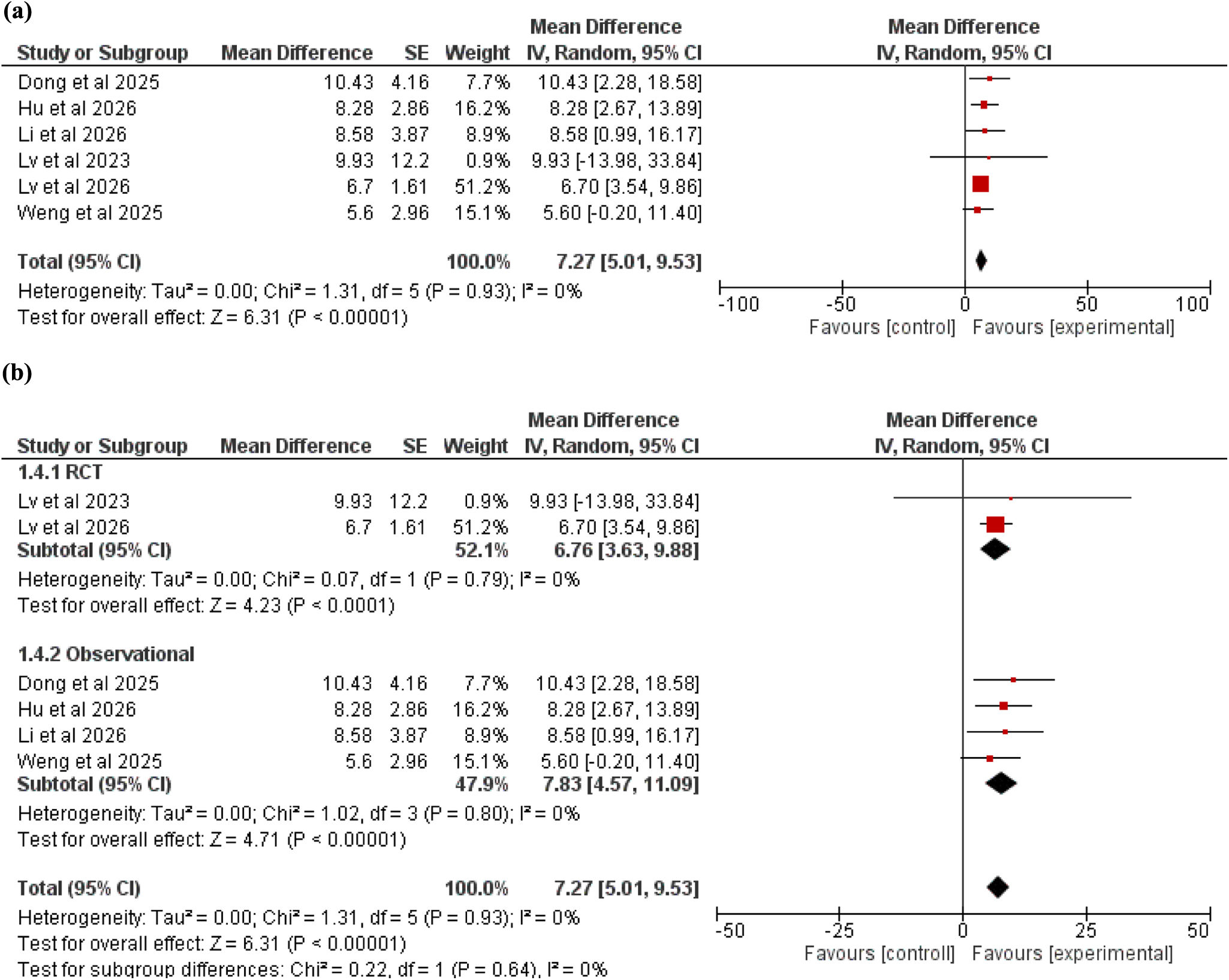
This analysis encompassed all six studies (n=561), with a pooled between-group difference of +7.27 percentage points in the percentage change from baseline (95% CI 5.01–9.53; p<0.00001; Fig. 4(a)), with negligible heterogeneity (I2=0%; Chi2=1.31, p=0.93). Subgroup analysis by study design showed a pooled estimate of +6.76 percentage points (95% CI 3.63–9.88; I2=0%) among randomised trials and +7.83 percentage points (95% CI 4.57–11.09; I2=0%) among observational studies (test for subgroup differences p=0.64; Fig. 4(b)).
(a) Forest plot of the percentage change in eGFR from baseline. (b) Subgroup analysis of the percentage change in eGFR from baseline, comparing randomised controlled trials versus observational studies. Data were pooled using a random-effects model (DerSimonian–Laird/inverse variance). MD, mean difference; CI, confidence interval; IV, inverse variance; RCT, randomised controlled trial.
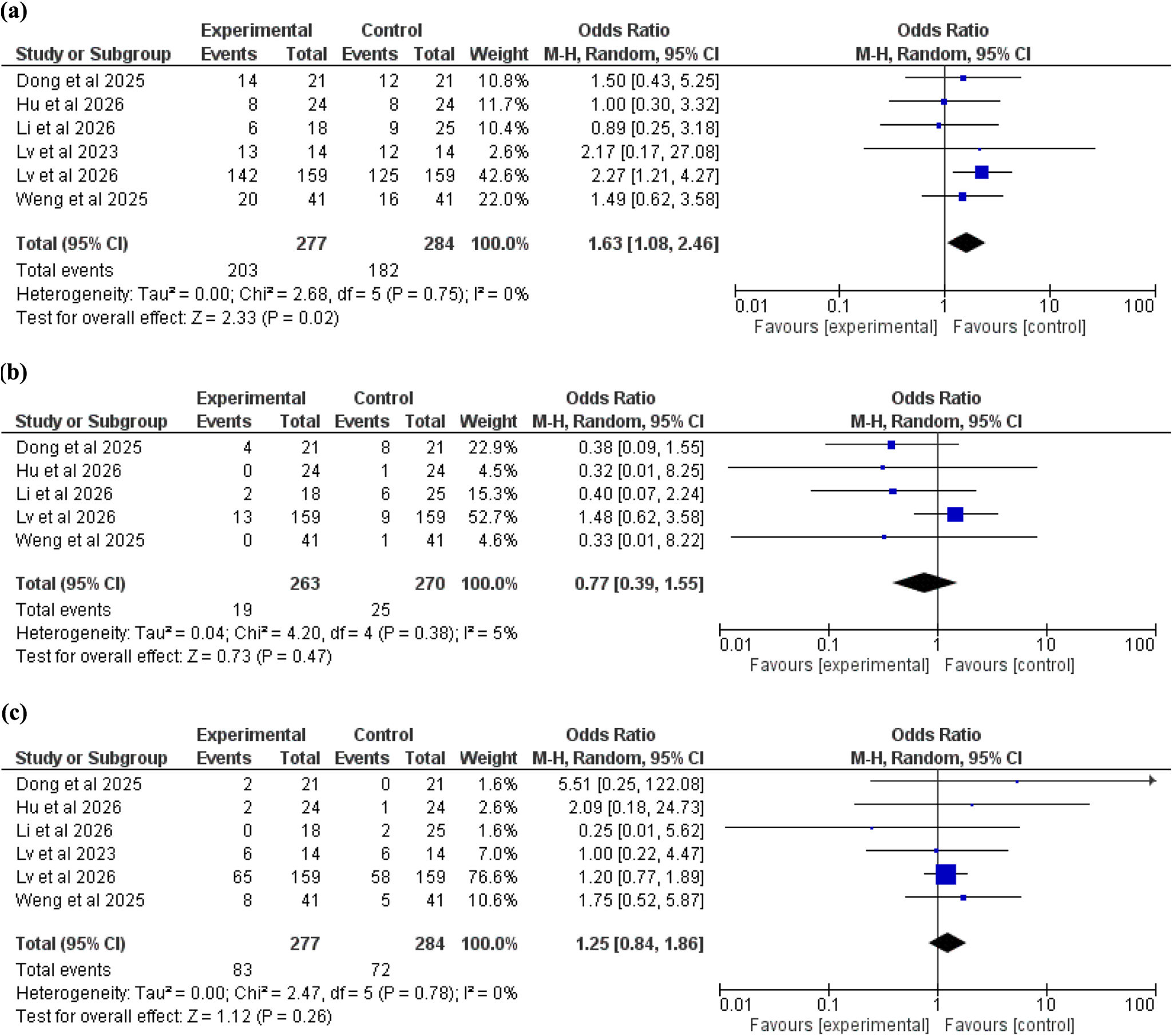
Pooling six studies (n=561; telitacicept: 203 events in 277 patients; control: 182 events in 284 patients) showed adverse events occurring significantly more often under telitacicept (OR 1.63; 95% CI 1.08–2.46; p=0.02; Fig. 5(a)), without heterogeneity (I2=0%; Chi2=2.68, p=0.75). This corresponds to an estimated 10.3 more adverse events per 100 patients treated with telitacicept (95% CI 1.8–17.4 more per 100).
(a) Forest plot of any adverse event. Data were pooled using a random-effects Mantel–Haenszel model. OR, odds ratio; CI, confidence interval; M-H, Mantel–Haenszel. (b) Forest plot of urinary tract infection (UTI). Data were pooled using a random-effects Mantel–Haenszel model. OR, odds ratio; CI, confidence interval; M–H, Mantel–Haenszel. (c) Forest plot of upper respiratory tract infection (URTI). Data were pooled using a random-effects Mantel–Haenszel model. OR, odds ratio; CI, confidence interval; M–H, Mantel–Haenszel.
Five studies were pooled (n=533; telitacicept: 19 events in 263 patients; control: 25 events in 270 patients). UTI incidence was comparable across groups (OR 0.77; 95% CI 0.39–1.55; p=0.47; Fig. 5(b)), with negligible heterogeneity (I2=5%; Chi2=4.20, p=0.38). This corresponds to an estimated 2.0 fewer UTIs per 100 patients treated with telitacicept (95% CI 5.4 fewer to 4.4 more per 100).
Upper respiratory tract infectionSix studies were pooled (n=561; telitacicept: 83 events in 277 patients; control: 72 events in 284 patients). URTI rates showed no significant between-group difference (OR 1.25; 95% CI 0.84–1.86; p=0.26; Fig. 5(c)), with no heterogeneity (I2=0%; Chi2=2.47, p=0.78). This corresponds to an estimated 4.5 more URTIs per 100 patients treated with telitacicept (95% CI 3.2 fewer to 13.4 more per 100).
Serious adverse eventsSAEs were reported in all six studies but arose in only two. In the phase 2 RCT (Lv et al., 2023),12 SAEs were seen in 3/30 telitacicept recipients (10.0%) compared with 1/14 on placebo (7.1%; p=0.718). This SAE figure reflects both active-dose arms combined (160mg and 240mg), as reported in the source trial; pooled efficacy and adverse-event analyses for this study (Table 1, Figs. 2, 4, and 5) use the 240mg arm only, so the shared placebo group is never split or reused across arms. In the TELIGAN trial (Lv et al., 2026),13 SAEs affected 4/159 telitacicept recipients (2.5%) against 13/159 on placebo (8.2%). The other four studies25–28 recorded no SAEs in any treatment arm. Because zero-event studies predominated and the two RCTs diverged in their rates, SAEs were not pooled and are summarised narratively.
Injection-site reactionsEvery one of the six studies reported ISRs, which were uniformly more common with telitacicept. In Lv et al. (2023),12 they reached 9/16 (56.3%) and 10/14 (71.4%) in the 160mg and 240mg arms, respectively, against 0% on placebo. In Lv et al., 2026,13 ISRs were noted in 80/159 (50.3%) telitacicept recipients compared with 22/159 (13.8%) on placebo, while injection-site pruritus affected 13.2% versus 1.9%. Across the observational studies, telitacicept ISR rates were 8/21 (38.1%) (Dong et al.27), 6/41 (14.6%) (Weng et al.25; control arm not reported), 4/18 (22.2%) with telitacicept monotherapy and 7/38 (18.4%) with telitacicept plus glucocorticoids (Li et al.28), and 4/24 (16.7%) (Hu et al.26). ISRs were not pooled. Across the four observational studies, control arms took oral agents and therefore could not develop ISRs, making their zero counts structural rather than informative.
Serum immunoglobulinsSerum immunoglobulin changes were documented in four of the six studies. In Lv et al. (2023),12 mean serum IgG fell by 2.56g/L (−24.6%) at 240mg, while IgM fell by 0.62g/L (−65.3%). As adverse events, IgG reductions were noted in 28.6% of telitacicept recipients against 7.1% on placebo, and IgM reductions in 35.7% against 0%. In Lv et al. (2026)(13), IgG reductions affected 21/159 (13.2%) telitacicept recipients versus none on placebo, and IgM reductions 39/159 (24.5%) versus 1/159 (0.6%). IgG stayed at or above 3g/L in every patient. In Weng et al.,25 prolonged telitacicept therapy (12 months, n=9) significantly lowered IgG from 9.5±2.5 to 7.0±2.1g/L and IgM from 0.9±0.5 to 0.3±0.2g/L (both p<0.01), whereas short-term therapy produced no significant change. Hu et al.26 found significant IgG and IgM reductions under telitacicept but none in the supportive care group. With data formats too heterogeneous to pool, these results are summarised narratively.
DiscussionBy pooling six comparator-controlled studies, this SRMA constitutes the largest quantitative synthesis of telitacicept versus supportive care in IgAN so far. Three main findings stand out. First, telitacicept yielded a 45.48 percentage point pooled reduction in proteinuria, which sharpened to 53.31 percentage points (I2=0%) once Li et al.28 was excluded in sensitivity analysis. Second, it was associated with a between-group difference in percentage eGFR change of 7.27 percentage points with no between-study heterogeneity across all six studies. However, this should be read cautiously rather than as evidence of unusual biological consistency. Third, its adverse event profile showed a higher rate of any adverse event (OR 1.63), driven mainly by injection-site reactions, with no significant excess of serious adverse events; the sample size, event counts, follow-up duration and power for serious safety outcomes nonetheless remain insufficient to establish comparative safety. Taken together, these results may position telitacicept as a promising immunological agent in IgAN.
Telitacicept's anti-proteinuric strength holds up well against the present IgAN treatment landscape. Among approved agents, sparsentan delivered a 42.8% UPCR reduction and a flatter eGFR slope (−2.7 vs −3.8mL/min/1.73m2/year).29 Targeted-release budesonide produced a 49.7% UPCR reduction at 12 months alongside a composite kidney outcome hazard ratio of 0.45 (95% CI 0.26–0.75), and its disease-modifying effect endured across a 15-month drug-free follow-up.30 Iptacopan, an oral proximal complement factor B inhibitor acting on a mechanistically separate but pathogenically convergent downstream pathway, lowered proteinuria by 38.3% at nine months. Its 24-month data showed an annual eGFR slope of −3.10 vs −6.12mL/min/1.73m2/year (a 49.3% slower decline) and a 43% reduction in the composite kidney failure endpoint.31,32 In the TESTING RCT, systemic methylprednisolone significantly cut composite kidney outcomes, though at the price of a significantly raised SAE rate,33 reaffirming the unmet clinical need for targeted therapies that preserve efficacy while sparing the toxicity that systemic immunosuppression consistently incurs.34 Among BAFF/APRIL-directed agents, atacicept, the closest mechanistic analogue, reached a 41.8% between-group UPCR reduction in the phase 3 ORIGIN 3 trial.11 This is directionally consistent with the large proteinuria reductions observed with telitacicept in the present analysis and reinforces the class reproducibility of dual BAFF/APRIL blockade. The selective APRIL inhibitor sibeprenlimab showed sustained proteinuria suppression in the phase 2 ENVISION trial and earned FDA Breakthrough Therapy designation35; the phase 3 VISIONARY trial (N=510, among the largest phase 3 RCTs in IgAN) confirmed UPCR reductions of 51.2% at nine months and 54.3% at 12 months.36 In an independent network meta-analysis spanning 19 IgAN agents, telitacicept ranked first for proteinuria reduction (SUCRA 99.9%).14 Our sensitivity-analysis proteinuria estimate (53.31 percentage points; I2=0%) matches or surpasses these benchmarks numerically. Even so, cross-trial comparisons warrant caution because study designs, background therapies, follow-up durations, and the proteinuria measures reported differ. The randomised trials in this review showed a larger proteinuria reduction than the observational studies (−54.93 versus −40.33 percentage points), so the pooled estimate is not inflated by the observational contribution here.
The 7.27 percentage point between-group difference in percentage eGFR change deserves particular attention. High-risk IgAN patients face a lifetime ESRD risk of 20–40%, and untreated GFR loss averages 2–4mL/min/1.73m2 annually. These correspond to roughly 85% and 61% renal survival at ten and twenty years, respectively.37 Because baseline eGFR and follow-up duration varied across the six included studies, this pooled percentage change is difficult to interpret in absolute clinical terms. This difference is therefore best read as a short-term signal in this surrogate kidney outcome, rather than an established clinical benefit, relative to the multi-year, hard-endpoint data available for haemodynamic agents. By way of context, pivotal trials of other targeted modalities have generally reported eGFR outcomes in absolute filtration units, such as targeted-release budesonide (preserving 5.05mL/min/1.73m2 over two years)30 and iptacopan (slowing the annualised eGFR decline by 3.02mL/min/1.73m2/year at 24 months).32 Real-world evidence additionally indicates that proteinuria reduction persists in patients whose baseline eGFR is below 35mL/min/1.73m2, with eGFR remaining stable throughout.38 Whereas SGLT2 inhibitors and RAS blockade work hemodynamically and can trigger an acute eGFR dip at the outset, telitacicept curbs upstream Gd-IgA1 production and immune complex formation without disturbing glomerular haemodynamics.37,39 This mechanistic difference argues for prospectively testing telitacicept alongside SGLT2 inhibitors and optimised RAS blockade, as anticipated in the KDIGO 2025 treatment framework.8,37
The OR of 1.63 for any adverse event reflected mild to moderate events, mainly ISRs and transient immunoglobulin changes. In the TELIGAN trial, Lv et al., 202613 recorded fewer serious adverse events with telitacicept than with placebo (4/159 versus 13/159); with events this sparse and only one trial contributing, this difference does not support an inference about the direction of serious-event risk. In one included observational study, marked proteinuria reduction occurred without an excess of opportunistic infections or hospitalisations.28 Because BAFF/APRIL blockade lowers circulating immunoglobulins, infection is the principal theoretical concern for serious safety with this class. Serious infections were numerically more common in the placebo arm of ORIGIN 3,11 long-term atacicept follow-up showed no significant excess of infection despite sustained immunoglobulin reductions,40 and a meta-analysis of BAFF/APRIL dual-antagonist RCTs found no class-level excess in serious infection risk41; the immunoglobulin reductions seen with these agents are attributed to on-target B-cell suppression rather than indiscriminate immunodepletion.42,43 Mechanistic similarity does not, however, establish equivalent safety. No statistically significant excess of serious adverse events was observed in the available short-term studies, but the sample size, event counts, duration of follow-up, and power for serious safety outcomes are insufficient to establish comparative safety. Longer-term comparative pharmacovigilance data are needed.
Under the KDIGO 2025 stepwise framework, telitacicept could be positioned as a targeted immunological therapy for patients with persistent proteinuria (≥0.5–1g/day) or progressive eGFR decline that continues despite optimised RAS blockade and SGLT2 inhibition.8,37 Regulatory activity around BAFF/APRIL-directed therapies has grown quickly: sibeprenlimab gained FDA accelerated approval in November 202536,44; phase 3 atacicept data support the efficacy of dual inhibition as a class11; and the phase 2b ORIGIN trial had already shown significant UPCR reduction with atacicept by 36 weeks.45 Together they confirm this cytokine axis as a key immunological target in IgAN. Looking ahead, multi-target regimens pairing BAFF/APRIL blockade with SGLT2 inhibition and RAS suppression offer a compelling therapeutic standard for high-risk patients.46,47 China, where IgAN makes up 40–50% of biopsy-proven primary glomerulonephritides48 and where biopsy prevalence is the highest worldwide (∼39.5% in Asia versus ∼22.1% in Europe49), constitutes the primary population addressed by this evidence base. East–West differences in disease phenotype and treatment response49,50 imply that prospective trials in ethnically diverse cohorts are needed for global generalisability.
Three recent meta-analyses have examined BAFF/APRIL-targeted therapies in IgAN and merit direct comparison. Borges et al. pooled four randomised trials (n=331) of BAFF- or APRIL-targeted agents broadly, with a search extending to December 2024.51 Tian et al. restricted their analysis to BAFF/APRIL dual antagonists specifically, telitacicept and atacicept, pooling three randomised trials (n=263) with a search to February 2025.41 Most recently, Tian and Li conducted a single-drug meta-analysis of sibeprenlimab, an APRIL-selective agent, pooling two randomised trials (n=665) with a search to November 2025,52 a single-drug design that mirrors ours in scope though for a different agent. All three were restricted to randomised trials, and none extended its search beyond November 2025. Incorporating real-world studies alongside randomised evidence, as the present SRMA does, necessarily introduces heterogeneity that a purely randomised-trial synthesis would not face, which is why we report the RCT-only and observational-only subgroup analyses above rather than treating the pooled estimate as a single homogeneous body of evidence.
This is, as far as we are aware, the first meta-analysis to combine randomised and real-world comparator-controlled evidence for telitacicept in IgAN. The two RCTs serve as the primary randomised anchor, complemented by four real-world cohorts (total n=561). Methodological rigour rested on PRISMA 2020,16 prospective PROSPERO registration, dual risk-of-bias appraisal, DerSimonian–Laird random-effects pooling, and post hoc sensitivity analyses. The I2=0% for eGFR across six heterogeneous studies should be interpreted cautiously; with only six studies, this more plausibly reflects limited power to detect heterogeneity than genuine biological consistency.
LimitationsOf the six included studies, four were observational; even after ROBINS-I appraisal, residual confounding cannot be ruled out. Follow-up spanned 12 weeks to 12 months and lacked hard kidney endpoints. In IgAN, proteinuria reduction is accepted as a reasonably likely surrogate for progression to kidney failure, although this reduction must be sustained to confer protection against progressive GFR loss and the minimum duration required is not established.20 Absolute eGFR change could not be presented at a common time point, as fewer than half of the included studies reported these values in a directly comparable way. Every study enrolled exclusively Chinese patients. In light of recognised East–West differences in IgAN clinical phenotype, histological severity, and treatment response,49,50 extending these findings to non-Asian populations will require prospective study in ethnically diverse cohorts. Injection-site reactions could not be formally pooled owing to structural zeros in the observational control arms. Furthermore, none of the six included studies reported Gd-IgA1 as a measured outcome; two (Weng et al., Hu et al.) noted this explicitly, citing inaccessible commercial assays. A quantitative Gd-IgA1 analysis could therefore not be performed, and the observed benefits should be interpreted without direct biomarker confirmation of the proposed mechanism. Chinese-language databases such as CNKI and Wanfang were not searched, a potential source of selection bias given that all six included studies were conducted in China. Given the small number of included studies, formal assessment of publication bias via funnel plot or Egger's test was not feasible, and the possibility of publication bias cannot be entirely excluded despite the consistency of the pooled findings. Finally, no head-to-head data comparing telitacicept with other approved IgAN agents (budesonide, sparsentan, iptacopan, sibeprenlimab) exist.
Certainty of evidence, formally graded using GRADE (Supplementary Table 3), was moderate for the short-term eGFR signal and low to very low for proteinuria, adverse events, and infection outcomes, reflecting the risk-of-bias and imprecision concerns above.
ConclusionThis meta-analysis shows that, relative to supportive care, telitacicept appears to lower proteinuria in IgAN and was associated with a short-term between-group difference in percentage eGFR change, without a significant excess of serious adverse events; the clinical importance and durability of the eGFR finding remain uncertain. These findings should be read as preliminary given the modest sample size and short follow-up. None of the included studies assessed hard kidney outcomes such as progression to kidney failure, dialysis initiation, or long-term eGFR trajectory, and the available studies are insufficient to establish comparative safety. These results suggest telitacicept may be a promising immunological option for high-risk IgAN patients whose proteinuria persists despite optimised supportive care, and may represent a complementary addition to SGLT2 inhibitors and RAS blockade under the KDIGO 2025 framework, although the present analysis cannot test this. Whether these short-term surrogate findings translate into preserved long-term kidney function and a lower ESRD burden will need confirmation from future randomised trials in ethnically diverse populations with extended follow-up and hard kidney endpoints.
Statement of ethical approvalThis study is a systematic review and meta-analysis of previously published data. No primary data collection involving human participants was conducted, and therefore ethics committee approval and informed consent were not applicable.
Declaration of generative AIDuring the preparation of this work the authors used Google Gemini in order to translate the abstract and title into Spanish. No generative AI or AI-assisted technologies were used in the writing and editing of this manuscript. Language tools were used only to check grammar, spelling and punctuation. The authors reviewed, edited, verified, and remain fully responsible for all content of this manuscript.
Funding sourcesThis study was not supported by any sponsor or funder.
Conflict of interestThe authors have no conflicts of interest to declare.
Data availability statementAll data generated or analysed during this study are included in this article.
The followings are the supplementary data to this article: