

Cardiorenal metabolic syndrome (CRMS) represents an integrative clinical and pathophysiological construct that recognizes the bidirectional and progressive interaction between cardiovascular dysfunction, chronic kidney disease, and metabolic alterations. The gut microbiota corresponds to the dynamic community of microorganisms that inhabit the human gastrointestinal tract in a symbiotic relationship with the host. In recent years, the gut microbiota has emerged as a key systemic modulator within CRMS. A detailed review, based on the available and current evidence, of the impact of gut microbiota on CRMS is presented below. This is a narrative review in which a structured, non-systematic search was conducted to evaluate the relationship between the gut microbiota and cardiorenal metabolic syndrome. The search was performed in PubMed/MEDLINE, Embase, and Google Scholar (January 2015–December 2025), restricted to articles in English and Spanish, using terms related to microbiota, insulin resistance, diabetes mellitus, obesity, cardiorenal metabolic syndrome, chronic kidney disease, and heart failure. Observational studies, clinical trials, reviews, meta-analyses, and mechanistic studies were included. Records were screened independently by two authors, with disagreements resolved by consensus and adjudicated by a third author when necessary. Of 1215 records identified and 56 full texts assessed, 26 articles were included in the qualitative synthesis, and their methodological quality was appraised with design-specific instruments. The selection process is summarized in a flow diagram adapted from the PRISMA 2020 framework. The evidence integrated in this review supports the notion that the gut microbiota may act as a relevant pathophysiological component of CRMS, acting as a transversal axis connecting obesity, endocrine–metabolic dysfunction, chronic kidney disease (CKD), and cardiovascular disease, particularly heart failure. It must be emphasized, however, that the benefits reported for microbiota-directed interventions are confined almost entirely to intermediate or surrogate markers—uremic toxins, inflammatory markers, and mineral metabolism or anthropometric parameters. No study identified in this review demonstrated a reduction in all-cause or cardiovascular mortality, in major adverse cardiovascular events, or an improvement in kidney survival. The gut microbiota may represent an integrating pathophysiological element in CRMS, supporting a shift from an isolated-organ view toward a more systemic understanding of risk and disease progression in patients with multimorbidity. Until trials powered for hard cardiovascular and renal endpoints become available, microbiota modulation should be regarded as a complement to—and never a substitute for—therapies of established prognostic benefit. The microbiota-based phenotypic classification proposed here should be regarded as a conceptual, hypothesis-generating framework that has not yet been clinically validated.
El síndrome cardiorrenal metabólico (SCRM) constituye un constructo clínico y fisiopatológico integrador que reconoce la interacción bidireccional y progresiva entre la disfunción cardiovascular, la enfermedad renal crónica y las alteraciones metabólicas. La microbiota intestinal corresponde a la comunidad dinámica de microorganismos que habitan el tracto gastrointestinal humano en una relación simbiótica con el huésped. En los últimos años, la microbiota intestinal ha emergido como un modulador sistémico clave dentro del SCRM. A continuación se presenta una revisión detallada, basada en la evidencia disponible y actual, del impacto de la microbiota intestinal en el SCRM. Revisión narrativa en la que se realizó una búsqueda estructurada y no sistemática para evaluar la relación entre la microbiota intestinal y el síndrome cardiorrenal metabólico. La búsqueda se llevó a cabo en PubMed/MEDLINE, Embase y Google Scholar (enero de 2015-diciembre de 2025), restringida a artículos en inglés y en español, utilizando términos relacionados con microbiota, resistencia a la insulina, diabetes mellitus, obesidad, síndrome cardiorrenal metabólico, enfermedad renal crónica e insuficiencia cardíaca. Se incluyeron estudios observacionales, ensayos clínicos, revisiones, metaanálisis y estudios mecanísticos. Dos autores realizaron el cribado de forma independiente; las discrepancias se resolvieron por consenso y, cuando fue necesario, mediante la adjudicación de un tercer autor. De 1.215 registros identificados y 56 textos completos evaluados, se incluyeron 26 artículos en la síntesis cualitativa, cuya calidad metodológica se valoró con instrumentos específicos según el diseño. El proceso de selección se resume en un diagrama de flujo adaptado del marco PRISMA 2020. La evidencia integrada en esta revisión respalda que la microbiota intestinal puede actuar como un componente fisiopatológico relevante del SCRM, como eje transversal que conecta la obesidad, la disfunción endocrino-metabólica, la enfermedad renal crónica (ERC) y la enfermedad cardiovascular, en particular la insuficiencia cardíaca. Debe subrayarse, no obstante, que los beneficios descritos para las intervenciones dirigidas a la microbiota se limitan casi exclusivamente a marcadores intermedios o subrogados: toxinas urémicas, marcadores inflamatorios y parámetros del metabolismo mineral o antropométricos. Ningún estudio identificado en esta revisión demostró una reducción de la mortalidad por cualquier causa o cardiovascular, de los eventos cardiovasculares mayores, ni una mejoría de la supervivencia renal. La microbiota intestinal puede representar un elemento fisiopatológico integrador en el SCRM y apoya el tránsito desde una visión de órgano aislado hacia una comprensión más sistémica del riesgo y de la progresión de la enfermedad en pacientes con multimorbilidad. Mientras no se disponga de ensayos con potencia estadística para variables cardiovasculares y renales duras, la modulación de la microbiota debe considerarse un complemento—y nunca un sustituto—de las terapias con beneficio pronóstico establecido. La clasificación fenotípica basada en la microbiota que aquí se propone debe considerarse un marco conceptual generador de hipótesis, todavía no validado clínicamente.
Cardiorenal metabolic syndrome (CRMS) represents an integrative clinical and pathophysiological construct that acknowledges the bidirectional and progressive interaction among cardiovascular dysfunction, chronic kidney disease, and metabolic disorders—particularly obesity, insulin resistance, and type 2 diabetes mellitus. This syndrome accounts more comprehensively than single-organ models for the high burden of major cardiovascular events, renal disease progression, and mortality observed in these populations, even at early stages of subclinical dysfunction. From an epidemiological standpoint, CRMS has become one of the leading determinants of global morbidity and mortality, driven by shifts in dietary patterns, population aging, and nutritional transition.1–3
This integrative view has recently been formalized at the level of scientific societies. In 2023, the American Heart Association (AHA) defined cardiovascular–kidney–metabolic (CKM) syndrome as a systemic disorder attributable to the pathophysiological interconnections among metabolic risk factors, chronic kidney disease and the cardiovascular system, resulting in multiorgan dysfunction and a disproportionate burden of adverse cardiovascular outcomes. The advisory proposed a staged framework ranging from stage 0, defined by the absence of CKM risk factors, through stage 1, characterized by excess or dysfunctional adiposity; stage 2, defined by metabolic risk factors such as hypertriglyceridemia, hypertension, diabetes mellitus or metabolic syndrome and/or by established chronic kidney disease; stage 3, corresponding to subclinical cardiovascular disease within CKM syndrome or to risk equivalents such as very-high-risk chronic kidney disease; and stage 4, defined by clinical cardiovascular disease and subdivided according to the presence or absence of kidney failure.4 The term cardiorenal metabolic syndrome (CRMS) used throughout this review is conceptually equivalent to CKM syndrome and is retained here for consistency with the nephrology literature. Importantly, the AHA staging provides an operational framework onto which the microbiota-related mechanisms discussed below can be mapped, since intestinal dysbiosis is plausibly involved from the earliest stages—dysfunctional adiposity and insulin resistance—to the most advanced ones, namely heart failure and kidney failure.
The gut microbiota comprises the dynamic community of microorganisms—predominantly bacteria, but also viruses, fungi, and archaea—that inhabit the human gastrointestinal tract in a symbiotic relationship with the host. Under eubiotic conditions, this ecosystem is characterized by high diversity and functional stability, actively participating in the fermentation of non-digestible fibers, the production of short-chain fatty acids (SCFAs), the regulation of energy metabolism, the modulation of immune responses, and the maintenance of intestinal barrier integrity. Within this framework, prebiotics are defined as non-digestible substrates that selectively stimulate beneficial microorganisms; probiotics as live microorganisms that, when administered in adequate amounts, confer health benefits; postbiotics as bioactive microbial metabolites or components with demonstrable physiological effects; and synbiotics as rational combinations of prebiotics and probiotics designed to synergistically potentiate their effects.5–8
In recent years, the gut microbiota has emerged as a key systemic modulator within CRMS, functioning as a true “metabolic organ” capable of simultaneously influencing energy homeostasis, low-grade inflammation, endothelial function, and the progression of cardiorenal damage. Observational and mechanistic evidence has indicated that unfavorable dietary patterns are associated with intestinal dysbiosis, increased intestinal barrier permeability, and the production of microbial metabolites with deleterious systemic effects. In this context, dietary indices designed to reflect microbiota health have shown consistent associations with gastrointestinal disturbances and cardiometabolic markers, reinforcing the role of diet as an upstream determinant of the gut–heart–kidney axis.1,2
In patients with chronic kidney disease, dietary composition may influence intestinal microbial diversity and the production of bioactive metabolites, including short-chain fatty acids and compounds derived from protein metabolism. Clinical studies have shown that low-fiber, high animal-protein diets are associated with a pro-inflammatory microbial profile, with increased uremic toxin generation and activation of systemic inflammatory pathways, which may contribute to both renal progression and heightened cardiovascular risk. These findings are particularly relevant in CRMS, where the coexistence of renal and cardiometabolic disease amplifies the detrimental impact of intestinal dysbiosis.2,3
Beyond observational associations, recent evidence derived from Mendelian randomization has provided support for a potential causal contribution, suggesting that specific microbial taxa may be linked to renal function, albuminuria, and inflammatory markers, possibly mediated through immunological mechanisms. Although this approach relies on its own methodological assumptions, it reinforces the hypothesis that the gut microbiota is not merely an epiphenomenon of CRMS, but rather an active biological determinant that participates in the pathological interconnection among metabolism, the kidney, and the cardiovascular system.9
Taken together, these data position the gut microbiota as a central component in the pathophysiology of cardiorenal metabolic syndrome, integrating diet, inflammation, immunity, and organ dysfunction. Understanding this axis opens new opportunities for risk stratification, the development of translational biomarkers, and the implementation of targeted therapeutic strategies, with the potential to meaningfully impact the prevention and comprehensive management of CRMS.1,9
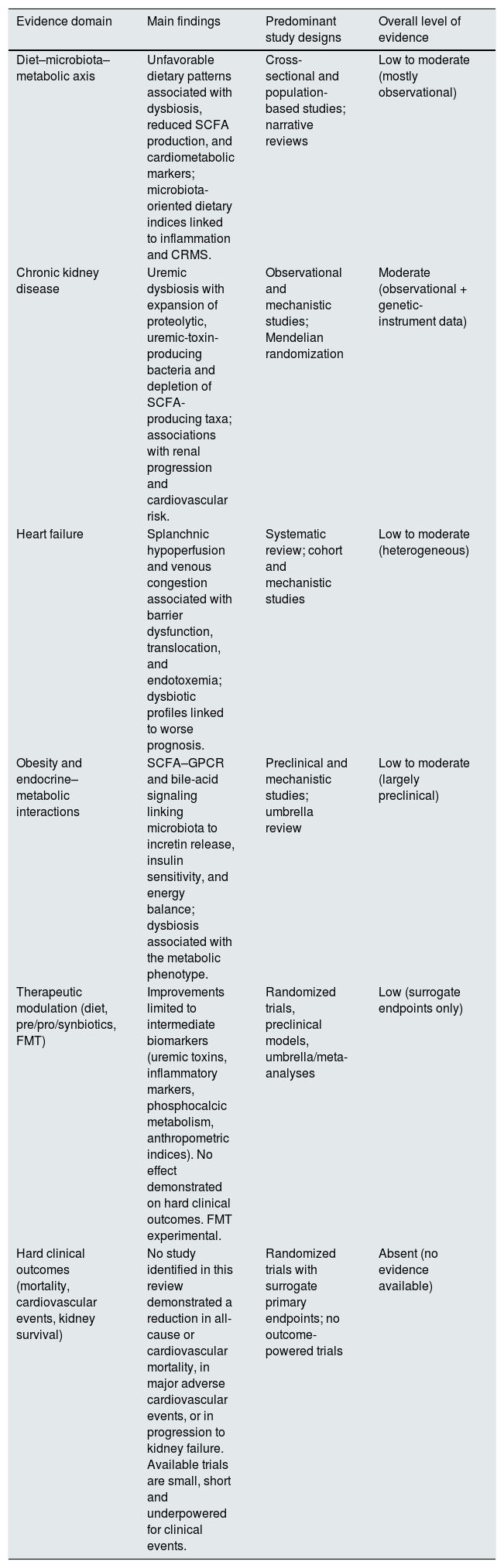
MethodsThis study is a narrative review conducted to evaluate the relationship between the gut microbiota and cardiorenal metabolic syndrome. Given the exploratory and integrative nature of the topic, a narrative rather than a systematic approach was adopted; consequently, the review does not aim to provide a quantitative synthesis of the retrieved evidence. A structured, non-systematic literature search was performed across major databases—PubMed/MEDLINE, Embase, and Google Scholar—covering the period from January 2015 to December 2025, and was restricted to articles published in English or Spanish. The search was last executed on 31 January 2026. The search combined terms related to gut microbiota and dysbiosis with terms related to insulin resistance, type 2 diabetes mellitus, obesity, metabolic syndrome, cardiorenal metabolic syndrome, chronic kidney disease, and heart failure, using Boolean operators and, where available, the corresponding MeSH descriptors. Eligibility was assessed at title/abstract and full-text levels. Inclusion criteria were: studies conducted in humans or in relevant preclinical models; observational studies (cohort and cross-sectional), clinical trials, systematic reviews, meta-analyses, and mechanistic studies addressing the relationship between the gut microbiota and the cardiorenal-metabolic axis. Exclusion criteria were: conference abstracts, letters without primary data, articles without full-text availability, and studies not focused on the gut–heart–kidney axis. Reference lists of key articles were additionally screened to identify further relevant sources. The number of records retrieved and excluded at each stage is reported below and summarized in Supplementary Fig. S1, adapted from the PRISMA 2020 framework. The main domains of evidence retrieved, together with their predominant study designs and an overall appraisal of the level of evidence, are summarized in Table 1.
Summary of the main domains of evidence linking the gut microbiota to cardiorenal metabolic syndrome, with predominant study designs and an overall appraisal of the level of evidence.
| Evidence domain | Main findings | Predominant study designs | Overall level of evidence |
|---|---|---|---|
| Diet–microbiota–metabolic axis | Unfavorable dietary patterns associated with dysbiosis, reduced SCFA production, and cardiometabolic markers; microbiota-oriented dietary indices linked to inflammation and CRMS. | Cross-sectional and population-based studies; narrative reviews | Low to moderate (mostly observational) |
| Chronic kidney disease | Uremic dysbiosis with expansion of proteolytic, uremic-toxin-producing bacteria and depletion of SCFA-producing taxa; associations with renal progression and cardiovascular risk. | Observational and mechanistic studies; Mendelian randomization | Moderate (observational + genetic-instrument data) |
| Heart failure | Splanchnic hypoperfusion and venous congestion associated with barrier dysfunction, translocation, and endotoxemia; dysbiotic profiles linked to worse prognosis. | Systematic review; cohort and mechanistic studies | Low to moderate (heterogeneous) |
| Obesity and endocrine–metabolic interactions | SCFA–GPCR and bile-acid signaling linking microbiota to incretin release, insulin sensitivity, and energy balance; dysbiosis associated with the metabolic phenotype. | Preclinical and mechanistic studies; umbrella review | Low to moderate (largely preclinical) |
| Therapeutic modulation (diet, pre/pro/synbiotics, FMT) | Improvements limited to intermediate biomarkers (uremic toxins, inflammatory markers, phosphocalcic metabolism, anthropometric indices). No effect demonstrated on hard clinical outcomes. FMT experimental. | Randomized trials, preclinical models, umbrella/meta-analyses | Low (surrogate endpoints only) |
| Hard clinical outcomes (mortality, cardiovascular events, kidney survival) | No study identified in this review demonstrated a reduction in all-cause or cardiovascular mortality, in major adverse cardiovascular events, or in progression to kidney failure. Available trials are small, short and underpowered for clinical events. | Randomized trials with surrogate primary endpoints; no outcome-powered trials | Absent (no evidence available) |
SCFA: short-chain fatty acids; CRMS: cardiorenal metabolic syndrome; FMT: fecal microbiota transplantation; GPCR: G protein-coupled receptor.
Eligibility was assessed independently by two authors (C.M.R.G. and J.D.L.F.) at both the title/abstract and full-text levels. Disagreements were resolved by discussion between the two reviewers, and any disagreement persisting after discussion was adjudicated by a third author (J.R.F.), whose decision was final. The database search identified 1205 records (PubMed/MEDLINE, n=280; Embase, n=755; Google Scholar, n=170 screened by relevance), and 10 additional records were identified through screening of the reference lists of key articles. After removal of 156 duplicates, 1059 records were screened by title and abstract, of which 1003 were excluded as not relevant to the gut–heart–kidney axis. The remaining 56 full-text articles were assessed for eligibility and 30 were excluded: 4 conference abstracts, 3 letters without primary data, 5 articles without full-text availability, and 18 articles not focused on the gut–heart–kidney axis. A total of 26 articles were finally included in the narrative synthesis.
Appraisal of methodological qualityAlthough a narrative review does not require a formal quantitative risk-of-bias assessment, the methodological quality of the included studies was appraised in order to inform the weight given to each body of evidence. Systematic reviews and meta-analyses were appraised using AMSTAR-2, randomized controlled trials using the Cochrane risk-of-bias tool RoB 2, observational studies using the Newcastle–Ottawa Scale, and animal studies using the SYRCLE risk-of-bias tool; Mendelian randomization studies were assessed against the core instrumental-variable assumptions. In keeping with the narrative design, this appraisal was used to weight the evidence rather than as an exclusion criterion. The resulting overall appraisal for each domain of evidence, together with the predominant study designs, is summarized in Table 1 and Supplementary Fig. S1.
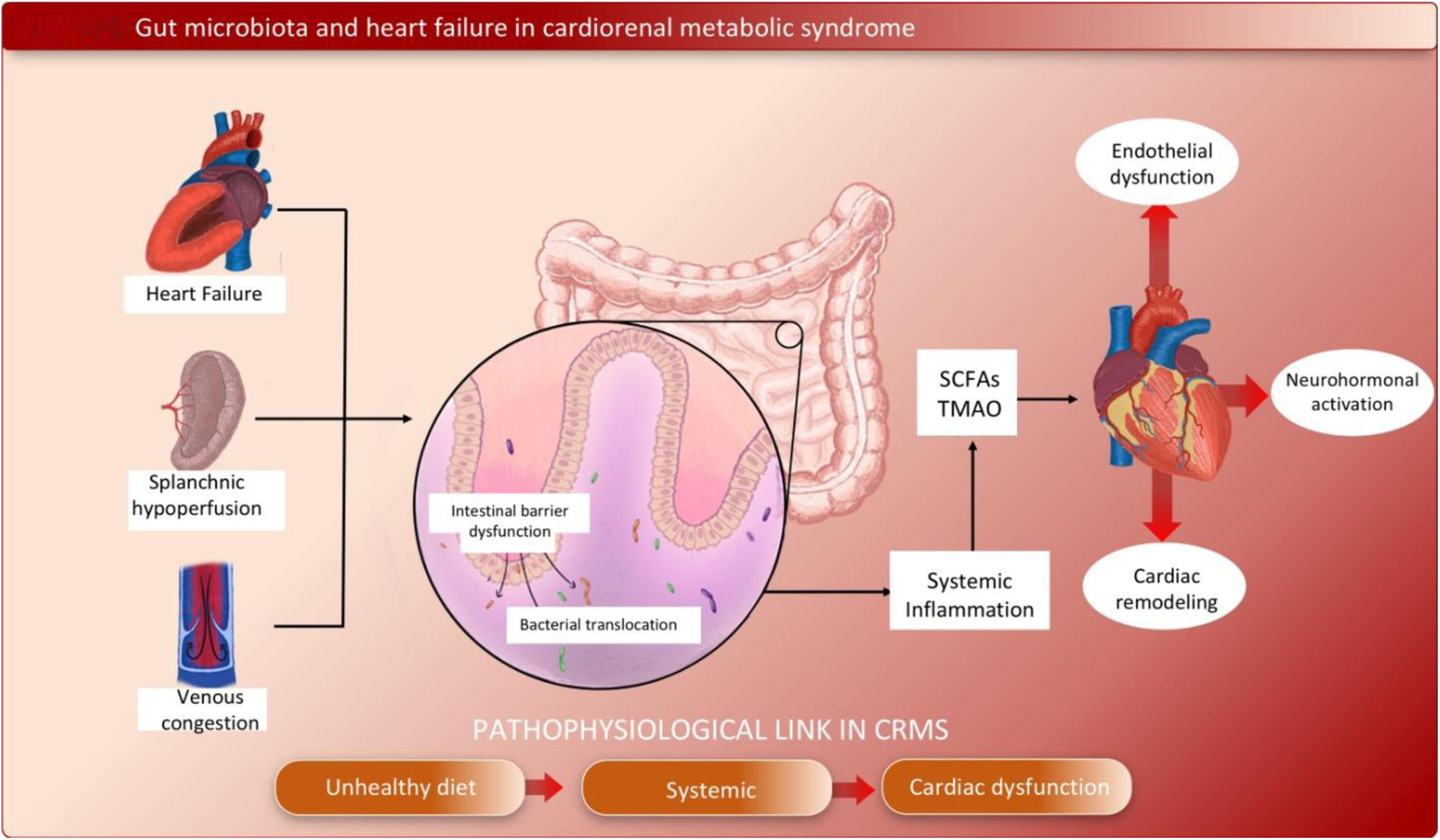
Gut microbiota and heart failure in cardiorenal metabolic syndromeHeart failure (HF), whether with reduced or preserved ejection fraction, represents a central clinical manifestation of CRMS and is closely associated with metabolic and renal disturbances. In this context, the gut microbiota emerges as a relevant modulator of HF progression through inflammatory, metabolic, and hemodynamic mechanisms. The splanchnic hypoperfusion and venous congestion inherent to HF promote intestinal barrier dysfunction, increased permeability, and bacterial translocation, thereby amplifying the low-grade systemic inflammation characteristic of CRMS.10–15
It is worth highlighting that the intestinal dysbiosis associated with cardiorenal metabolic syndrome and heart failure is characterized by specific alterations in the taxonomic composition of the microbiota. Consistently, a reduction in beneficial short-chain fatty acid-producing bacteria has been described—particularly within the genera Faecalibacterium, Roseburia, and Eubacterium (phylum Firmicutes)—along with a decrease in Akkermansia muciniphila (phylum Verrucomicrobia), a key microorganism for maintaining intestinal barrier integrity. In contrast, a relative increase in potentially pathogenic bacteria has been observed, especially within the phylum Proteobacteria (including Escherichia, Klebsiella, and Enterobacter), associated with greater lipopolysaccharide production, metabolic endotoxemia, and systemic inflammation. Furthermore, alterations in the Firmicutes/Bacteroidetes ratio, as well as an increase in proteolytic bacteria producing uremic metabolites and nitrogenous compounds, have been linked to endothelial dysfunction, neurohormonal activation, and poorer cardiovascular outcomes. These taxonomic patterns reinforce the notion that the dysbiosis observed in CRMS is not nonspecific, but rather reflects reproducible microbial signatures with pathophysiological relevance and potential value as clinical biomarkers.13–18
Additionally, microbiota-derived metabolites—including SCFAs, trimethylamine N-oxide (TMAO), and other products of protein metabolism—directly influence endothelial function, neurohormonal activation, and myocardial remodeling, acting as key mediators of cardiovascular damage. As illustrated in Fig. 1, intestinal dysbiosis associated with heart failure is linked to heightened systemic inflammation, vascular dysfunction, and activation of neurohormonal pathways. Observational studies and systematic reviews have demonstrated that unfavorable microbial profiles are associated with greater inflammatory burden, vascular dysfunction, and worse prognosis in patients with heart failure.13,15–18 Likewise, unhealthy dietary patterns—common among patients with heart failure and metabolic comorbidity—are associated with intestinal dysbiosis and increased production of pro-inflammatory metabolites, contributing to the progression of cardiovascular disease.1,19 Taken together, these mechanisms position the gut microbiota as a central pathophysiological link between diet, inflammation, and cardiac dysfunction within CRMS (Fig. 1).

Schematic representation of the bidirectional interaction between the gut microbiota and heart failure within cardiorenal metabolic syndrome (CRMS). The venous congestion and splanchnic hypoperfusion inherent to heart failure promote intestinal barrier dysfunction, increased permeability, and bacterial translocation, thereby amplifying the low-grade systemic inflammation characteristic of CRMS. The resulting dysbiosis disrupts the production of microbial metabolites including short-chain fatty acids (SCFAs) and trimethylamine N-oxide (TMAO) which in turn influence endothelial function, neurohormonal activation, and myocardial remodeling. These mechanisms integrate diet, inflammation, and cardiac dysfunction, positioning the gut microbiota as a central pathophysiological modulator of CRMS.
Chronic kidney disease (CKD) is a structural component of CRMS and a potent amplifier of cardiovascular risk. CKD is associated with a characteristic intestinal dysbiosis—termed uremic dysbiosis—marked by a reduction in SCFA-producing bacteria and an expansion of microorganisms that generate uremic toxins such as indoxyl sulfate and p-cresyl sulfate. These alterations promote systemic inflammation, oxidative stress, endothelial dysfunction, and immune activation, all of which are central mechanisms in cardiorenal progression.2,10,11,20,21
Clinical evidence demonstrates that dietary composition is associated with changes in the gut microbiota in patients with CKD, influencing relevant inflammatory, metabolic, and cardiovascular biomarkers.2,19 Furthermore, Mendelian randomization studies have suggested a possible causal link between specific microbial taxa and renal function, albuminuria, and immune activation, supporting the concept of the gut microbiota as a potentially active determinant—rather than a mere epiphenomenon of renal and cardiovascular damage.9 From this perspective, the gut–kidney axis constitutes a critical node within CRMS, with both pathophysiological and therapeutic implications.11,20,21
Microbiota-derived uremic toxins beyond TMAO: indoxyl sulfate and p-cresyl sulfateUremic retention solutes of microbial origin are a defining feature of the gut–kidney axis, and their relevance to CRMS extends well beyond TMAO. Of particular importance is the protein-bound fraction which, because of its high albumin affinity, is poorly cleared by conventional dialysis and accumulates progressively as renal function declines. Indoxyl sulfate originates from the bacterial tryptophanase-mediated conversion of dietary tryptophan into indole, which is absorbed in the colon and subsequently hydroxylated and sulfated in the liver. p-Cresyl sulfate derives from the fermentation of tyrosine and phenylalanine by anaerobic proteolytic genera—including Clostridium, Bacteroides and members of the Enterobacteriaceae—to p-cresol, which is then sulfated in the intestinal mucosa and liver, with a smaller fraction conjugated with glucuronic acid to yield p-cresyl glucuronide. Related tryptophan-derived metabolites, such as indole-3-acetic acid, follow analogous pathways. The generation of all these solutes is therefore directly determined by the balance between proteolytic and saccharolytic fermentation, and is amplified by high animal-protein and low-fiber diets, by prolonged colonic transit and by the uremic dysbiosis described above.22,23
Mechanistically, indoxyl sulfate is taken up by proximal tubular cells through the organic anion transporters OAT1 and OAT3 and activates the aryl hydrocarbon receptor, nuclear factor-κB and transforming growth factor-β signaling, producing oxidative stress, tubulointerstitial fibrosis and glomerulosclerosis. In the cardiovascular compartment it induces endothelial dysfunction, vascular smooth muscle cell proliferation, osteoblastic transdifferentiation with vascular calcification, and cardiac fibrosis. p-Cresyl sulfate shares many of these effects and additionally impairs leukocyte function and insulin signaling. Clinically, higher serum concentrations of free indoxyl sulfate and free p-cresyl sulfate have been associated with vascular disease and with all-cause and cardiovascular mortality across the spectrum of CKD, largely independently of the glomerular filtration rate.22,23 These solutes thus link the microbiota directly to the classic cardiorenal phenotype: they accumulate as renal function declines, are amplified by proteolytic dysbiosis, and in turn accelerate both renal and vascular damage—a self-reinforcing loop that is central to the uremic-renal phenotype described in the classification proposed below.
Consistent with the argument developed throughout this review, however, the therapeutic corollary has not been established. These solutes have been characterized almost exclusively as prognostic biomarkers, and no intervention that lowers them has been shown to improve survival or renal outcomes. They should therefore be regarded, at present, as markers of proteolytic dysbiosis and of cardiorenal risk rather than as validated therapeutic targets.
Microbiota, inflammation, and endocrine–metabolic interactionsCRMS is characterized by a complex network of endocrine–metabolic interactions in which insulin resistance, chronic low-grade inflammation, and hormonal dysfunction play a central role. The gut microbiota may influence these pathways through SCFA production, modulation of the innate and adaptive immune system, and interaction with hormonal axes such as glucagon-like peptide-1 (GLP-1), peptide YY (PYY), and other incretins.11,16,24,25
SCFAs particularly butyrate and propionate exert anti-inflammatory, immunomodulatory, and metabolic effects, with potential impact on insulin sensitivity, lipid metabolism, and energy homeostasis. However, in dysbiotic states associated with CKD, obesity, and CRMS, the reduction of SCFA-producing bacteria contributes to a pro-inflammatory environment that perpetuates endocrine–metabolic dysfunction and accelerates cardiovascular damage.3,16,24,25 This phenomenon pathophysiologically integrates the gut microbiota with the metabolic and hormonal components of CRMS.
Obesity, diet, and microbiota: the metabolic core of CRMSObesity represents the metabolic core of cardiorenal metabolic syndrome (CRMS) and one of the primary drivers of intestinal dysbiosis. Recent evidence has demonstrated that gut microbiota composition is not only associated with obesity, but actively participates in the regulation of energy balance, lipid metabolism, systemic inflammation, and insulin resistance.15,25,26 Mechanistically, a central pathway linking diet–microbiota–obesity involves signaling mediated by G protein-coupled receptors (GPCRs) expressed on enteroendocrine cells, adipocytes, and immune cells. SCFAs—acetate, propionate, and butyrate—derived from commensal bacterial fermentation of dietary fiber, act as ligands for GPCRs such as GPR41/FFAR3 and GPR43/FFAR2 (free fatty acid receptors 3 and 2), promoting the release of satiety hormones from intestinal L-cells, particularly GLP-1 and PYY, with effects on appetite reduction, delayed gastric emptying, and improved insulin sensitivity. In obesity and low-fiber diets, the decline in SCFA-producing bacteria is associated with reduced incretin signaling, increased energy intake, and progression of the metabolic phenotype of CRMS.14,21–23
Complementarily, the gut microbiota modulates energy homeostasis through the biotransformation of bile acids, generating metabolites that interact with receptors such as Takeda G protein-coupled receptor 5 (TGR5) and the farnesoid X receptor (FXR), which are relevant to enteroendocrine signaling, lipid metabolism, and insulin sensitivity. These functional axes explain why microbiota-modulating strategies—including dietary modifications, prebiotics, probiotics, synbiotics, and bioactive compounds such as polyphenols—have shown potential to modify adverse metabolic profiles, improve inflammatory biomarkers, and modulate cardiorenal risk in models of obesity and chronic kidney disease.3,11,26,27
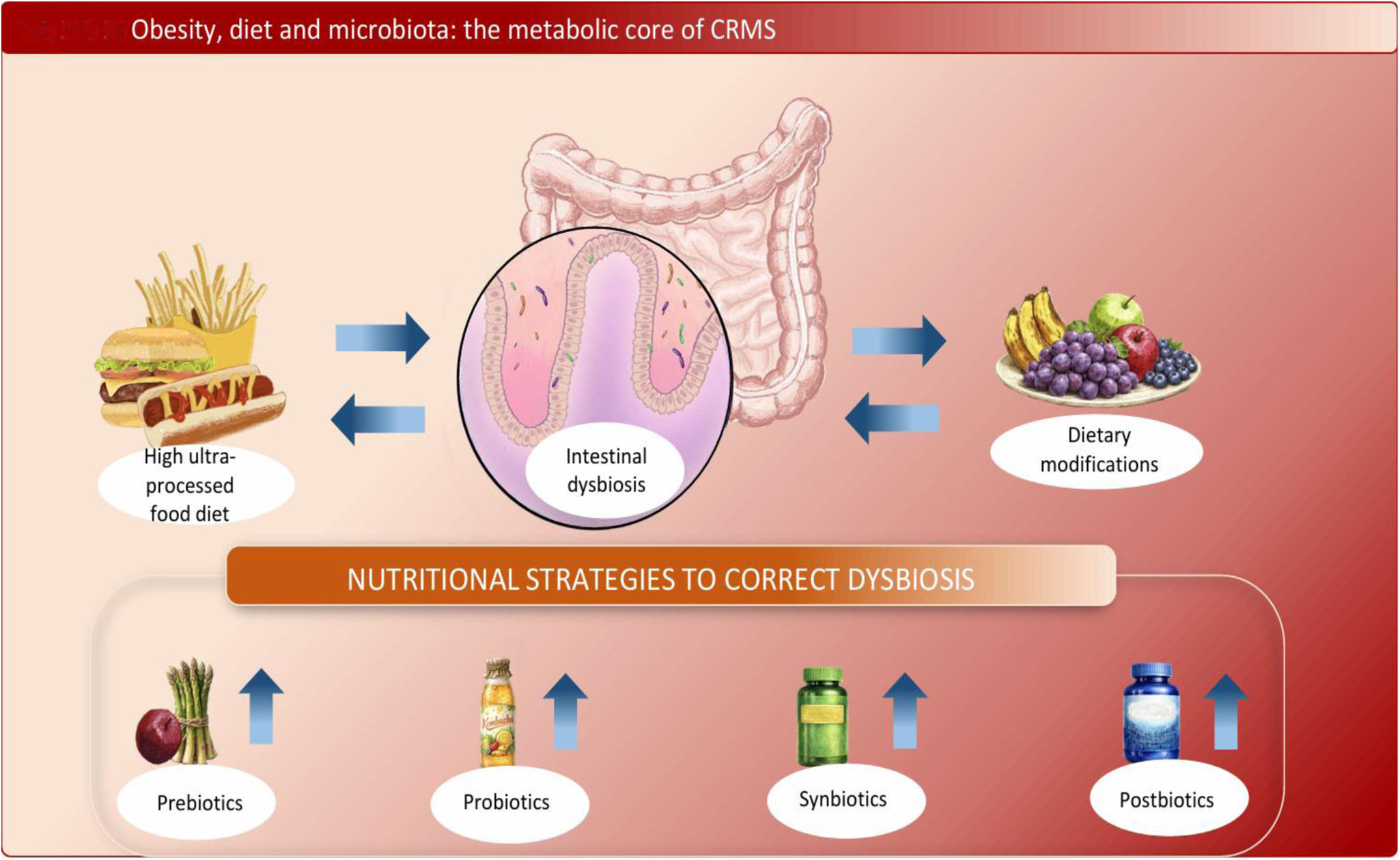
Dietary indices designed to reflect microbiota health thus reinforce the role of diet as an upstream intervention capable of simultaneously impacting multiple components of CRMS.1,2,19 These mechanisms are summarized schematically in Fig. 2, which illustrates the interaction between visceral obesity, diet, intestinal dysbiosis, and therapeutic microbiota modulation as an integrating axis of CRMS.

Obesity, diet, and microbiota: the metabolic core of cardiorenal metabolic syndrome (CRMS). The figure illustrates how obesity—particularly visceral adiposity—acts as the metabolic core of CRMS by promoting intestinal dysbiosis, low-grade metabolic inflammation, and insulin resistance. Unhealthy dietary patterns alter the composition and function of the gut microbiota, while modulation strategies—including dietary modifications, prebiotics, probiotics, synbiotics, and polyphenols—can partially restore microbial homeostasis and modulate cardiometabolic and cardiorenal risk.
Gut microbiota modulation is increasingly explored as a potential therapeutic component in the management of cardiorenal metabolic syndrome (CRMS) and chronic kidney disease (CKD), transcending the traditional organ-centered approach. In this context, dietary patterns rich in fiber, polyphenols, and minimally processed foods are emerging as the first-line dietary approach for cardiorenal-metabolic risk, with the potential to favorably modify the intestinal microbial profile, promoting short-chain fatty acid (SCFA) production, and improving host metabolic and immunological signaling.3,19,24,26 Population-based and mechanistic studies have demonstrated that dietary indices designed to reflect microbiota health are associated with lower systemic inflammation, improved insulin sensitivity, and reduced cardiometabolic and cardiorenal risk, reinforcing the role of diet as an upstream intervention capable of simultaneously impacting multiple components of CRMS.1,2,19
Dietary fiberIn practical terms, the most consistent dietary lever on the gut microbiota is fiber. Fermentable fiber is the principal substrate for saccharolytic bacteria and therefore the main determinant of SCFA production; increasing its intake simultaneously reduces the protein substrate available for proteolytic fermentation, thereby lowering the generation of indoxyl sulfate and p-cresyl sulfate, and shortens colonic transit time, which further limits proteolytic activity. Intake among patients with CKD is typically well below recommendations—of the order of 15g/day, against the 25–30g/day advised for the general population—largely because fruit, vegetables, legumes and whole grains are restricted out of concern for hyperkalemia. In a population-based analysis, higher dietary fiber intake was associated with lower C-reactive protein concentrations in the population as a whole and with lower all-cause mortality specifically among participants with CKD, an association not observed in those without kidney disease.28 A reasonable, evidence-informed recommendation is therefore a progressive increase toward 25–30g/day, prioritizing whole-food sources over supplements and introducing changes gradually to improve gastrointestinal tolerance.
Plant-based dietary patternsConsistent with the above, plant-dominant dietary patterns are increasingly recommended for cardiorenal-metabolic risk. Mediterranean and Dietary Approaches to Stop Hypertension (DASH) patterns, and the plant-dominant low-protein approach proposed for the conservative management of CKD—a protein intake of 0.6–0.8g/kg/day with more than half derived from plant sources—combine a high fiber and polyphenol content with a lower dietary acid load and a lower bioavailable phosphorus content, since plant phosphorus is largely bound as phytate.29 Substituting plant for animal protein reduces proteolytic fermentation and uremic toxin generation and increases the abundance of SCFA-producing taxa. The classical objection to these patterns—hyperkalemia—is not well supported by the available data: potassium bioavailability from plant foods is lower than from animal-derived foods and food additives, dietary fiber reduces constipation and thereby favors colonic potassium excretion, and observational and interventional studies have not shown a consistent increase in serum potassium with plant-dominant patterns.29 Individualization nevertheless remains essential in advanced CKD, in patients receiving renin–angiotensin system blockade or mineralocorticoid receptor antagonists, and in those with a history of hyperkalemia, in whom potassium monitoring and, where appropriate, potassium binders may allow a fiber-rich pattern to be maintained rather than abandoned. It must be underlined, however, that these recommendations rest on observational data, surrogate endpoints and physiological reasoning: no trial has demonstrated that a fiber-rich, plant-dominant pattern reduces mortality or progression to kidney failure specifically through microbiota modulation.
Complementarily, targeted interventions such as prebiotics, probiotics, and synbiotics have shown consistent benefits on intermediate biomarkers—including reductions in uremic toxins, improvements in inflammatory profiles, and modulation of phosphocalcic and energy metabolism in CKD and obesity models—although no benefit on hard clinical outcomes has been demonstrated.11,15,27,30 Available evidence suggests that these approaches may exert indirect cardiorenoprotective effects by restoring the metabolic function of the microbiota and its interaction with key hormonal and immunological axes.24–26
In parallel, emerging therapeutic strategies such as fecal microbiota transplantation (FMT) have shown encouraging preliminary results in modulating metabolism, systemic inflammation, and insulin sensitivity in pilot studies and experimental models of obesity and metabolic syndrome. However, their application in CRMS and CKD remains strictly experimental, limited by methodological heterogeneity, lack of standardization, and the absence of robust clinical trials with hard cardiovascular and renal endpoints—underscoring the need for well-designed research to evaluate their safety, reproducibility, and sustained clinical benefit.15,25,26
Additionally, the bidirectional interaction between pharmacotherapy and the gut microbiota is acquiring growing clinical relevance in CRMS. Pharmacovigilance studies have identified that medications commonly used in these populations—including phosphate binders, opioids, and other agents associated with drug-induced constipation—can worsen intestinal dysbiosis, increase systemic inflammation, and amplify the metabolic burden of the syndrome.31 This finding underscores the need to explicitly integrate intestinal health into therapeutic decision-making, optimize pharmacological regimens, and advance toward a systemic, personalized management model based on the gut–kidney–heart axis—aimed not only at controlling isolated parameters, but at restoring the global metabolic equilibrium of the patient with CRMS.
DiscussionThe evidence integrated in this review is consistent with a relevant pathophysiological role for the gut microbiota as a component of cardiorenal metabolic syndrome (CRMS), functioning as a transversal axis connecting obesity, endocrine–metabolic dysfunction, chronic kidney disease (CKD), and cardiovascular disease—particularly heart failure. This framework allows us to move beyond the traditional organ-centered paradigm and advance toward a systemic understanding of risk, disease progression, and therapeutic opportunities.1,9–12,15–17,19–21,24,26
From an epidemiological perspective, CRMS emerges as a direct consequence of the global nutritional transition, characterized by hypercaloric diets, low fiber intake, and high content of animal protein and ultra-processed foods. These dietary patterns are consistently associated with intestinal dysbiosis, reduced microbial diversity, and functional alterations of the gut ecosystem. Population studies and cohort analyses have demonstrated that dietary indices designed to reflect microbiota health correlate with constipation, systemic inflammation, cardiometabolic syndrome, and adverse cardiovascular outcomes, positioning diet as an upstream determinant of the gut–heart–kidney axis.1,2,19 In this context, the microbiota not only reflects lifestyle but may translate environmental exposures into biological signals with measurable clinical impact.
In CKD, the evidence is particularly robust. Uremic dysbiosis—characterized by a reduction in SCFA-producing bacteria and expansion of proteolytic microorganisms—promotes uremic toxin production, intestinal barrier deterioration, metabolic endotoxemia, and activation of systemic inflammatory pathways. This environment amplifies both renal progression and cardiovascular risk, reinforcing the concept of CKD as a key negative modulator within CRMS.2,10,11,20,21 The interaction between diet, microbiota, and inflammatory biomarkers in CKD underscores that exclusively nephroprotective therapeutic strategies may be insufficient if they do not comprehensively address the intestinal axis.
A conceptually significant advance derives from Mendelian randomization studies, which suggest a possible causal contribution, reporting associations between specific microbial taxa and renal function, albuminuria, and immune activation.9 This approach may reduce confounding and reverse causality bias, although its validity depends on assumptions that are not always fully verifiable; with this caveat, it supports the hypothesis that the gut microbiota is not an epiphenomenon of CRMS but rather an active biological determinant participating in the pathological interconnection among metabolism, the kidney, and the cardiovascular system. From an epidemiological standpoint, these findings support the microbiota as a potentially modifiable risk factor.9,17,19
In the cardiovascular domain, the gut microbiota acquires particular relevance in heart failure, where venous congestion and splanchnic hypoperfusion promote intestinal barrier dysfunction, bacterial translocation, and metabolic endotoxemia. This phenomenon perpetuates chronic low-grade inflammation, endothelial dysfunction, neurohormonal activation, and adverse myocardial remodeling, thereby contributing to the progression of heart failure.10–16 Although specific clinical studies remain heterogeneous, systematic reviews and population-based cohorts consistently identify intestinal dysbiosis and microbial metabolites as relevant modulators of the cardiorenal metabolic phenotype, particularly in patients with multimorbidity.
From an endocrine–metabolic standpoint, the gut microbiota regulates energy homeostasis, insulin sensitivity, and inflammation through SCFA production, immune system modulation, and interaction with hormonal axes such as GLP-1, PYY, and other incretins.3,15,16,24–26 The reduction in SCFA-producing bacteria observed in obesity and CKD contributes to a pro-inflammatory and proatherogenic environment that perpetuates metabolic dysfunction. In this sense, obesity should be understood not only as a risk factor but as a biological amplifier of the microbiota–inflammation–organ damage axis within CRMS.15,25,26
The therapeutic implications of these findings are promising but still incomplete. Microbiota-targeted interventions using probiotics, prebiotics, synbiotics, and nutritional strategies have demonstrated favorable effects on uremic toxins, systemic inflammation, and metabolic profiles, although no effect on hard clinical outcomes has been demonstrated.11,15,27,30 This heterogeneity likely reflects differences in strains, intervention duration, population characteristics, and the biological complexity of CRMS, suggesting that microbiota modulation should be integrated within evidence-based multifactorial cardiorenal strategies.
Specifically, a randomized clinical trial demonstrated that in dialysis patients, while probiotics did not reduce systemic inflammation (as determined by changes in the C-reactive protein (CRP)/albumin ratio at 24 weeks), they did reduce phosphorus concentrations at 16 and 24 weeks—particularly in patients using laxatives—by regulating gut microbiota balance.30 Relatedly, rodent models have demonstrated a similar phosphorus-lowering effect with synbiotic use at twelve weeks of treatment, along with reductions in serum parathyroid hormone, phosphocalcic products, and indoxyl sulfate levels compared to control animals, demonstrating promising effects in the management of hyperphosphatemia and secondary hyperparathyroidism.27
Furthermore, an umbrella review of five meta-analyses identified that microbial therapy as gut microbiota modulation has shown promise in reducing body mass index (BMI) (with the use of probiotics, prebiotics, and synbiotics) and waist circumference (with the use of prebiotics and synbiotics) in patients with metabolic syndrome; however, no statistically significant effects were identified for other anthropometric measures such as body fat percentage, waist-to-hip ratio, or body weight.15
From surrogate markers to hard clinical outcomesA point that deserves explicit emphasis, and that constrains every clinical inference drawn from this field, concerns the nature of the endpoints on which the evidence rests. Across the studies reviewed here, the effects attributed to microbiota modulation are confined almost exclusively to intermediate or surrogate markers: reductions in uremic toxins such as TMAO and indoxyl sulfate; decreases in CRP and inflammatory cytokines; changes in serum phosphorus and parathyroid hormone; and modest improvements in anthropometric indices. No study identified in this review demonstrated a reduction in all-cause or cardiovascular mortality, in major adverse cardiovascular events, or in hard kidney outcomes such as kidney failure requiring replacement therapy, doubling of serum creatinine, or a sustained decline in glomerular filtration rate. The dissociation is already visible within the evidence discussed above: in dialysis patients, probiotic therapy lowered serum phosphorus without modifying the CRP/albumin ratio,30 and the umbrella review of five meta-analyses found reductions in body mass index and waist circumference but no effect on body weight or body fat percentage.15
Several features of the available trials explain this gap. They are small, short—typically a few weeks to six months—heterogeneous in strains, doses and formulations, and uniformly underpowered for clinical events; most were not designed to capture them at all. The dissociation between biochemical and clinical efficacy is a recurrent lesson in nephrology, and it should temper the interpretation of this entire field: the association between microbiota-derived metabolites and adverse outcomes is robust and reproducible, but the assumption that modifying these metabolites will modify outcomes remains an untested hypothesis. Accordingly, and until adequately powered trials with hard endpoints are available, microbiota-directed strategies should be positioned as adjuncts to—and never as substitutes for—interventions of established prognostic benefit in CRMS, including renin–angiotensin system blockade, sodium–glucose cotransporter-2 inhibitors, mineralocorticoid receptor antagonists, glucagon-like peptide-1 receptor agonists and guideline-directed heart failure therapy.
A frequently underappreciated aspect is the interaction between pharmacotherapy and the gut microbiota. Pharmacovigilance studies have identified medications widely used in cardiorenal metabolic populations—including phosphate binders, opioids, and other drugs—associated with drug-induced constipation, a condition that may worsen intestinal dysbiosis, systemic inflammation, and the metabolic burden of CRMS.31 This finding introduces an additional clinical dimension in which therapeutic selection may indirectly modulate the gut–heart–kidney axis and the patient's overall prognosis.
LimitationsSeveral limitations should be acknowledged. Most available data derive from observational or preclinical studies, which limits causal inference, while the field shows substantial methodological heterogeneity and marked interindividual variability of the microbiota, restricting the generalizability of specific microbial signatures. As a narrative review, this work did not follow a registered protocol and did not include a formal quantitative risk-of-bias assessment, although the methodological quality of the included studies was appraised with design-specific instruments in order to weight the evidence. The search was restricted to the databases available to the authors; Scopus could not be interrogated, and although the overlap between PubMed/MEDLINE and Embase makes it unlikely that relevant work was missed, the possibility cannot be excluded. Most importantly, the evidence base is built almost entirely on intermediate endpoints: reductions in uremic toxins, inflammatory cytokines and mineral metabolism parameters have been reported repeatedly, whereas no study has demonstrated a reduction in mortality, in cardiovascular events, or an improvement in kidney survival attributable to microbiota modulation. Finally, the proposed microbiota-based classification of CRMS should be regarded as conceptual and hypothesis-generating rather than a validated clinical tool, and prospective studies with hard cardiovascular and renal endpoints will be needed to confirm both the phenotypes and their derived therapeutic strategies.
Proposed classification of CRMS according to gut microbiota dysfunction phenotypeBased on the available evidence, we propose a conceptual classification of microbiota-mediated cardiorenal metabolic syndrome, aimed at organizing the current evidence and guiding hypothesis generation and future research: It should be emphasized that this classification is exploratory and hypothesis-generating: it has not been prospectively validated, and its clinical applicability will need to be confirmed in future studies.
Type A: dietary-metabolic CRMS- •
Associated with obesity, insulin resistance, and low-fiber diets.
- •
Dysbiosis characterized by a reduction in SCFA-producing bacteria.
- •
Predominance of low-grade metabolic inflammation.
- •
Potentially reversible with dietary interventions.1,26
- •
Associated with moderate-to-advanced CKD.
- •
Uremic dysbiosis with increased uremic toxins and intestinal permeability.
- •
Characterized by an expansion of proteolytic bacteria, which generate uremic toxins consistently associated with adverse outcomes, mainly indoxyl sulfate and p-cresyl sulfate, and related protein-bound solutes such as indole-3-acetic acid and p-cresyl glucuronide, together with a reduction in saccharolytic, short-chain fatty acid-producing bacteria. These solutes are poorly cleared by dialysis and have been associated with vascular disease, cardiovascular events and mortality across CKD stages.22,23 Trimethylamine N-oxide (TMAO) is another microbiota-dependent metabolite linked to cardiovascular and renal risk, although it derives mainly from dietary choline and carnitine rather than from proteolytic fermentation.
- •
Although current evidence remains limited, prebiotics, probiotics, and synbiotics represent a strategy to be considered in these patients, aiming to improve the intestinal microbial profile, reduce uremic toxin generation, and support intestinal transit, although the available evidence is insufficient to support their routine use for slowing CKD progression or reducing cardiovascular events.
- •
High cardiovascular risk and accelerated renal progression.
- •
Requires combined nutritional and nephroprotective strategies.2,10,11,24,27,30
- •
Associated with heart failure with venous congestion.
- •
Intestinal barrier dysfunction and metabolic endotoxemia.
- •
Systemic inflammation amplified by splanchnic hypoperfusion.10,11
- •
Fluid overload is associated with increased mortality. Intestinal wall edema has been proposed as one potential mechanism linking venous congestion with barrier dysfunction and systemic inflammation; however, its independent causal contribution to adverse outcomes remains uncertain. Accordingly, avoiding fluid overload is a reasonable strategy to consider in this phenotype.
- •
Dysbiosis influenced by medications (phosphate binders, opioids, and others).
- •
Drug-induced constipation as an amplifying factor.
- •
Frequently underdiagnosed phenotype.31
- •
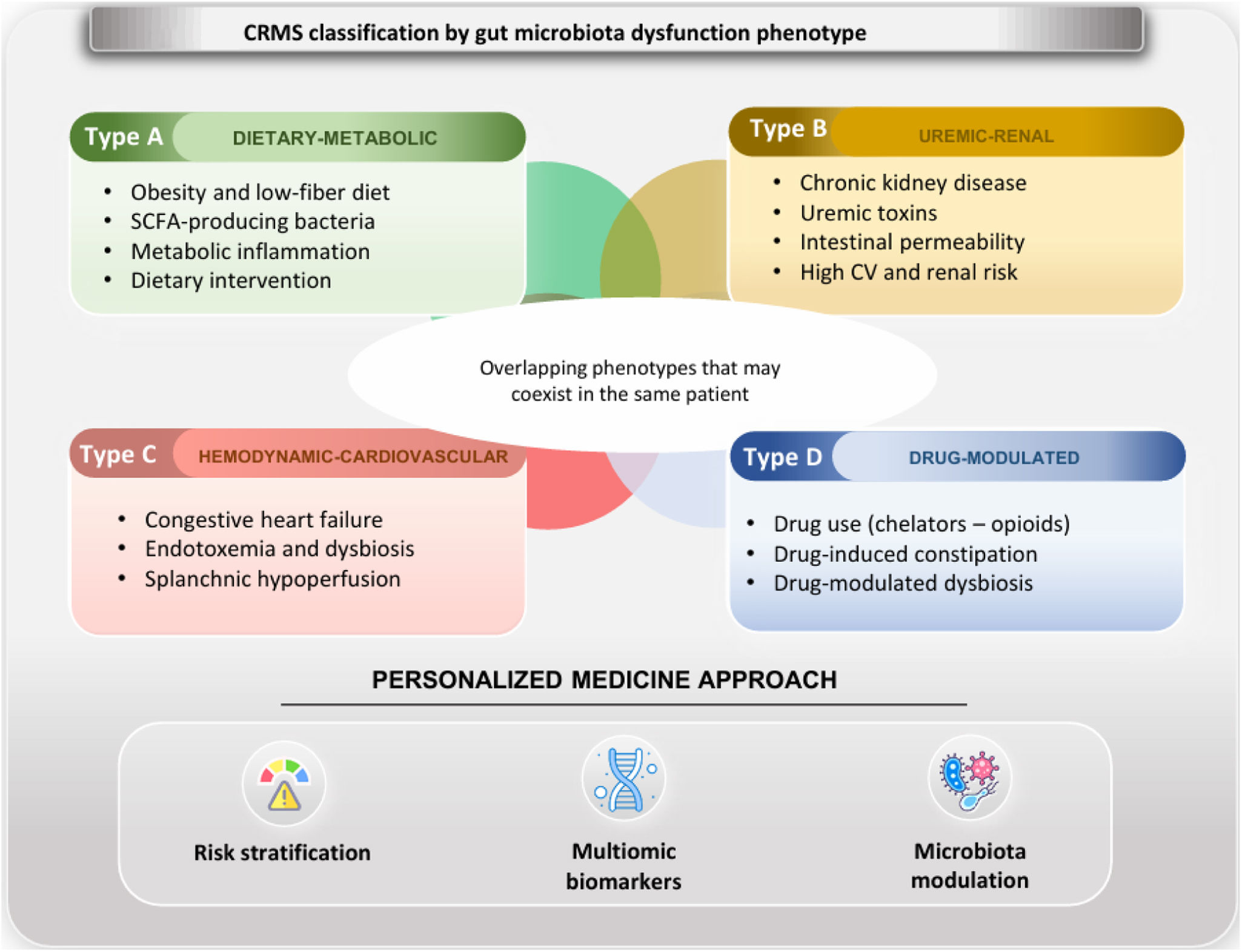
This classification is not intended to be mutually exclusive, but rather to recognize overlapping phenotypes that may coexist in the same patient, reflecting the true complexity of CRMS. See Fig. 3.
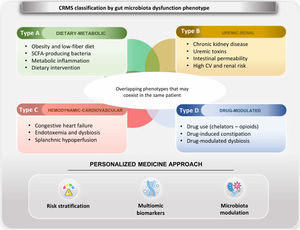 Fig. 3.
Cardiorenal metabolic syndrome (CRMS) classification according to gut microbiota dysfunction phenotype. The figure presents a conceptual classification proposal for microbiota-mediated cardiorenal metabolic syndrome, aimed at facilitating clinical risk stratification and the design of future interventions. Four phenotypes are proposed, which may overlap and coexist in the same patient. Authors’ own elaboration.

Recognition of the gut microbiota as an integrating axis of CRMS opens opportunities for a more personalized medicine approach, oriented toward risk stratification, the development of multi-omic biomarkers, and the implementation of targeted interventions. However, well-designed clinical trials are needed to evaluate microbiota modulation strategies with cardiovascular and renal endpoints, as well as epidemiological studies to validate this classification across different populations and clinical settings.1,9–21,24,26,27,30,31
ConclusionsCurrent evidence supports a relevant pathophysiological role for the gut microbiota in cardiorenal metabolic syndrome (CRMS), integrating obesity, endocrine–metabolic dysfunction, chronic kidney disease, and cardiovascular disease—particularly heart failure. This paradigm allows us to move beyond the traditional organ-centered approach and advance toward a systemic understanding of risk, disease progression, and the clinical complexity that characterizes patients with multimorbidity.
The available epidemiological, mechanistic, and genetic data suggest that intestinal dysbiosis is not an epiphenomenon of CRMS, but rather an active and potentially modifiable biological determinant capable of translating dietary, environmental, and pharmacological exposures into metabolic, immunological, and inflammatory signals with measurable clinical impact. In this context, diet emerges as an upstream determinant of the gut–heart–kidney axis, while chronic kidney disease and heart failure act as bidirectional amplifiers of intestinal dysfunction.
Integrating the gut microbiota within the pathophysiological model of CRMS opens new opportunities for risk stratification, the development of translational biomarkers, and the design of personalized therapeutic strategies—including dietary interventions, targeted microbiota modulation, and a more gut-conscious approach to pharmacological selection. Nevertheless, it must be stated plainly that the clinical benefit of these strategies remains unproven: the available evidence is confined to intermediate biomarkers, and no intervention has yet shown a reduction in mortality, in cardiovascular events, or in progression to kidney failure. Microbiota modulation should therefore complement, and not replace, cardiorenal therapies of established prognostic benefit, and its incorporation into clinical practice should await well-designed prospective trials powered for hard cardiovascular and renal endpoints.
Finally, the microbiota dysfunction phenotype-based classification of CRMS proposed in this review offers an integrative conceptual framework that may facilitate future research and clinical decision-making. Validating this approach across different populations and care settings will be essential to advancing toward a truly systemic and precision medicine approach in the management of cardiorenal metabolic syndrome.
Author contributionsAll authors contributed to the writing and reviewing of each draft and reviewing and approving the final draft for submission. R.D.A., J.R.F. and C.M.R.G. conceived and designed the manuscript; J.J. was responsible for the design and preparation of the figures. All authors contributed to the writing and reviewing of each draft and reviewing and approving the final version draft for submission.
FundingThis article was funded with the authors’ own resources.
Conflicts of interestR.D.A. has received honoraria as a speaker from Novo Nordisk, AstraZeneca, Bayer, and Boehringer Ingelheim, and has participated in advisory committees for AstraZeneca, Boehringer Ingelheim, Adium, Lilly, Bayer, and Novo Nordisk. J.R.F. has received honoraria as a speaker from AstraZeneca, Boehringer Ingelheim, Novo Nordisk, Lilly, Sanofi, Eurofarma, Adium, GSK, MSD, Merck, and Bayer. G.R.G. declares current employment at AstraZeneca in the role of Clinical Lead Renal SKG. The remaining authors declare no conflicts of interest relevant to this article. These declarations are not necessarily related to the work presented herein.
The followings are the supplementary data to this article: